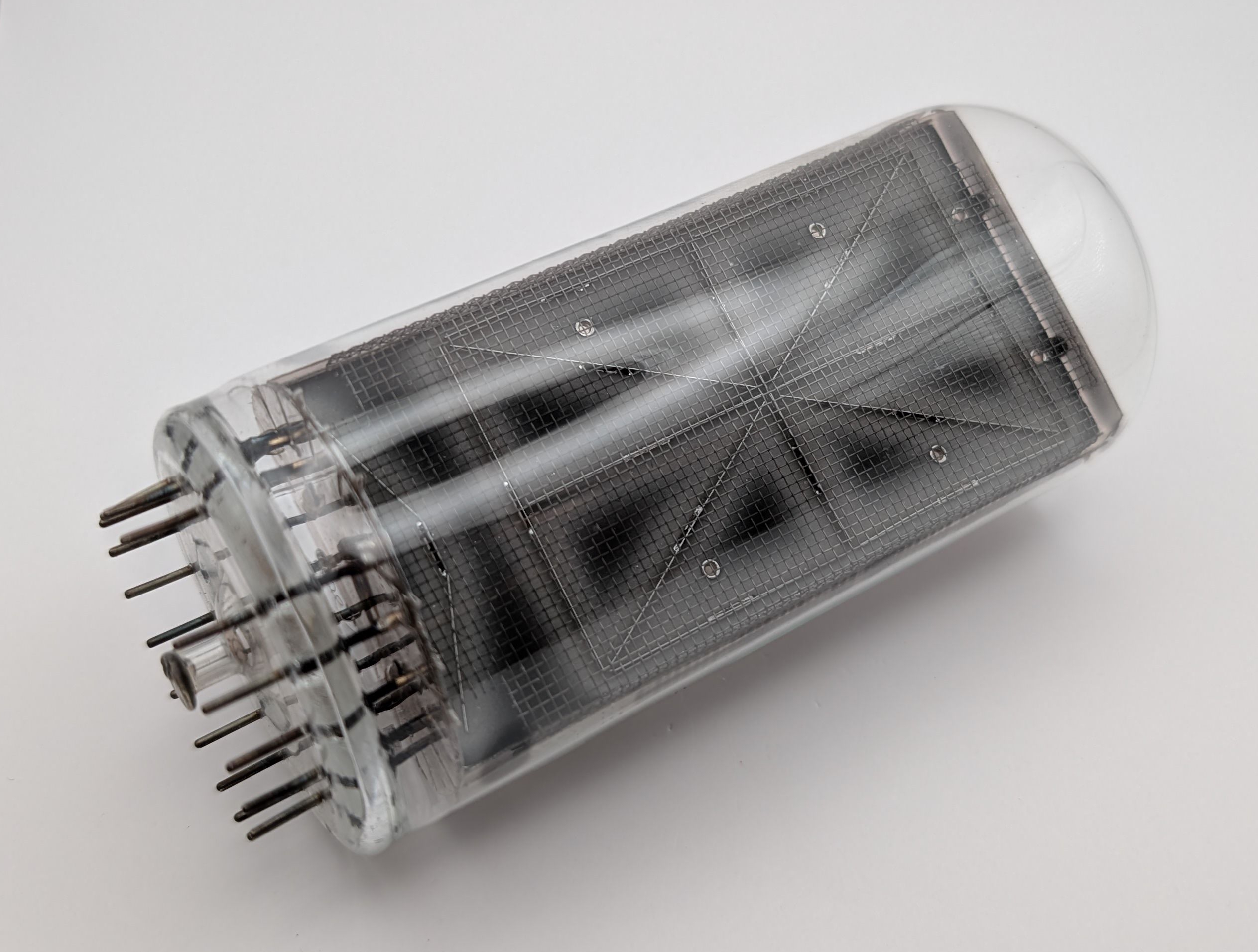
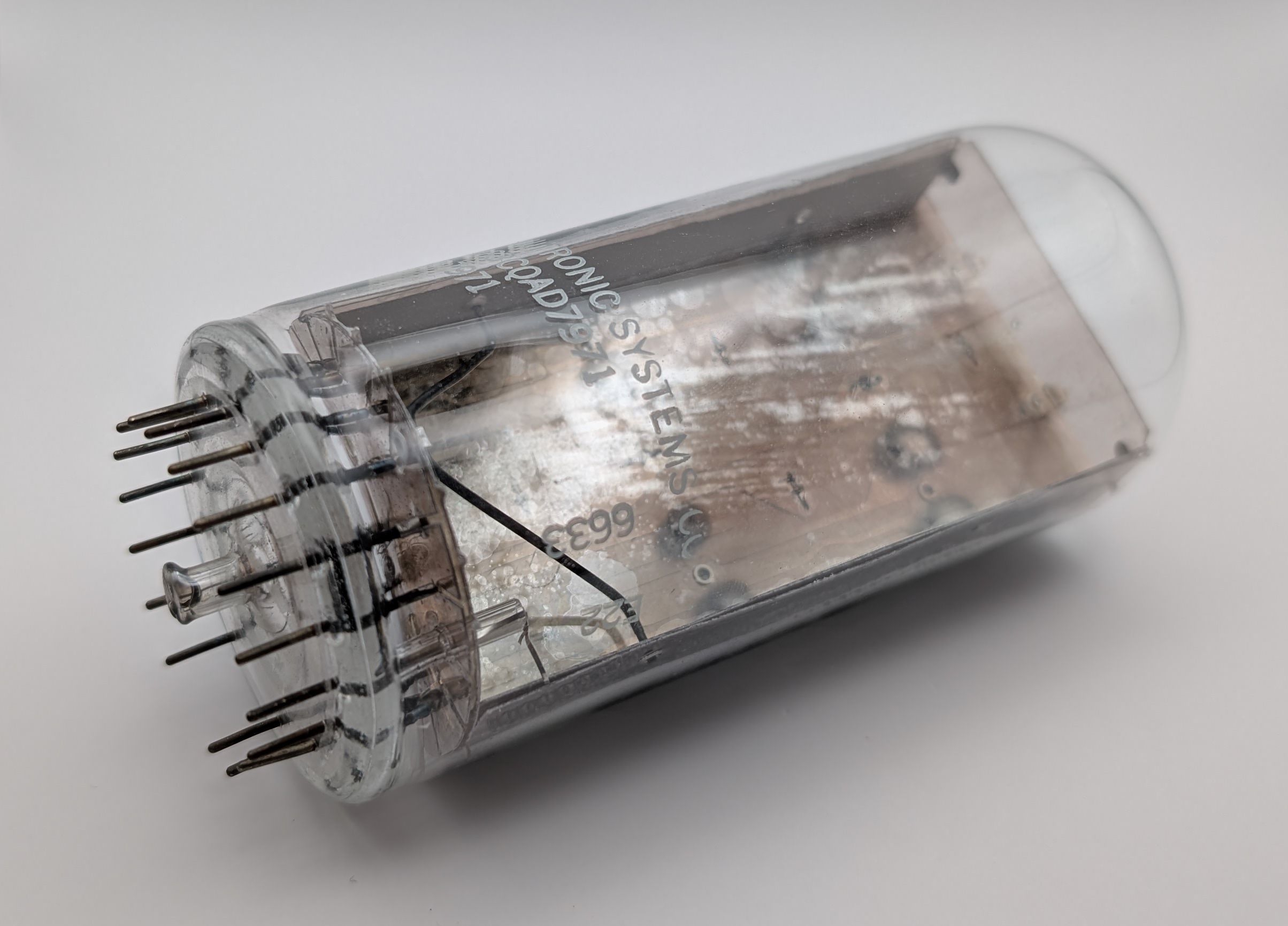
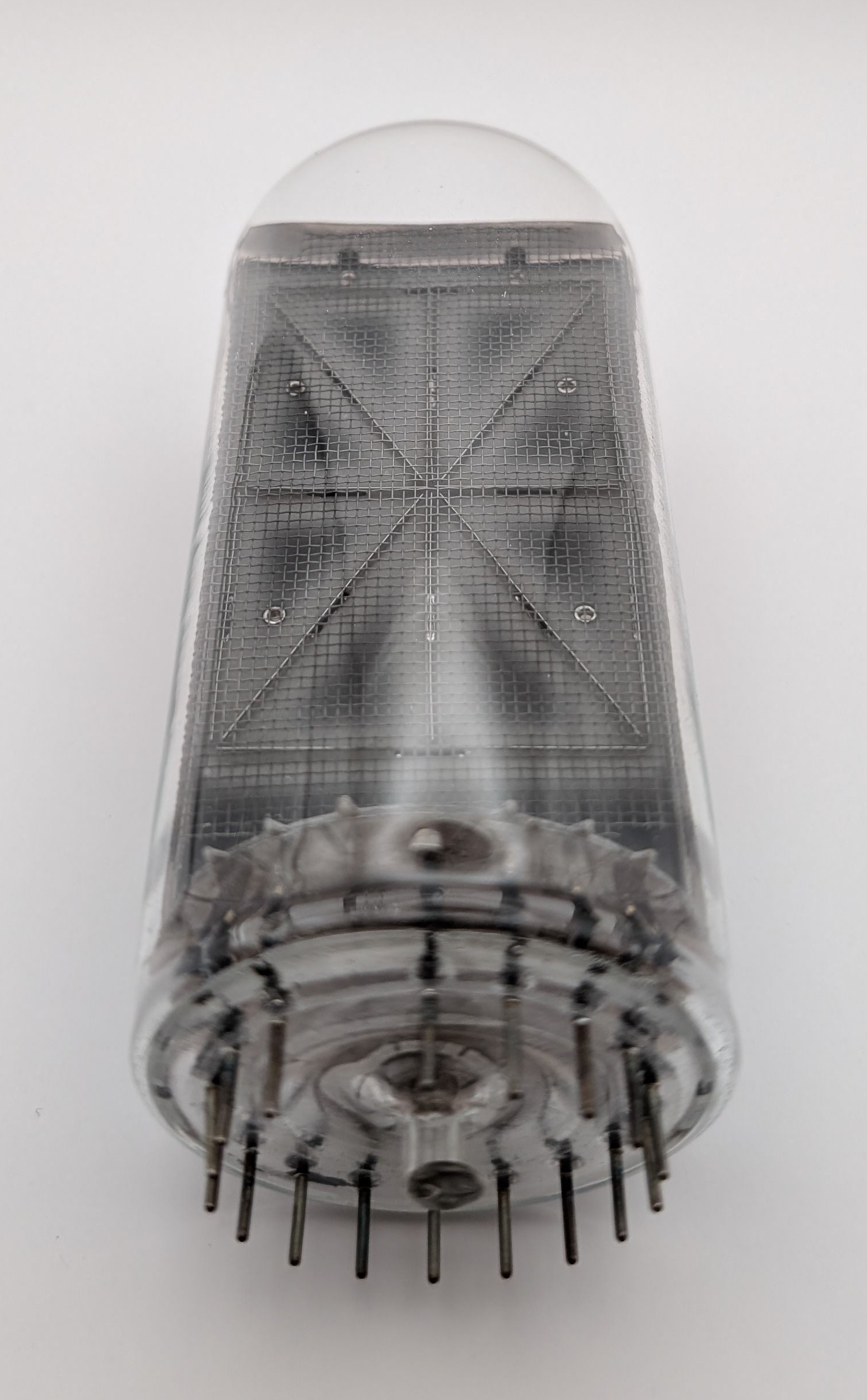
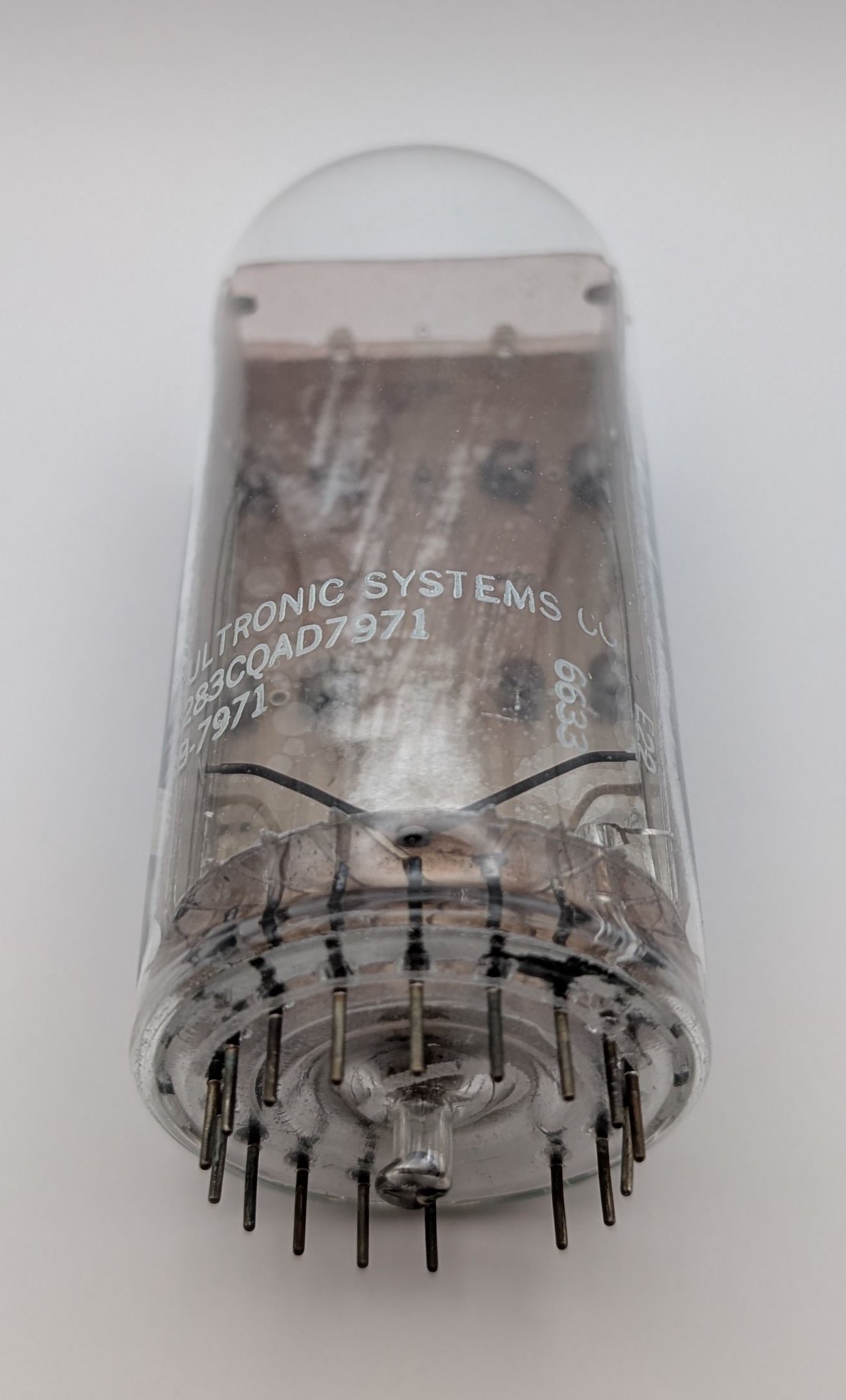
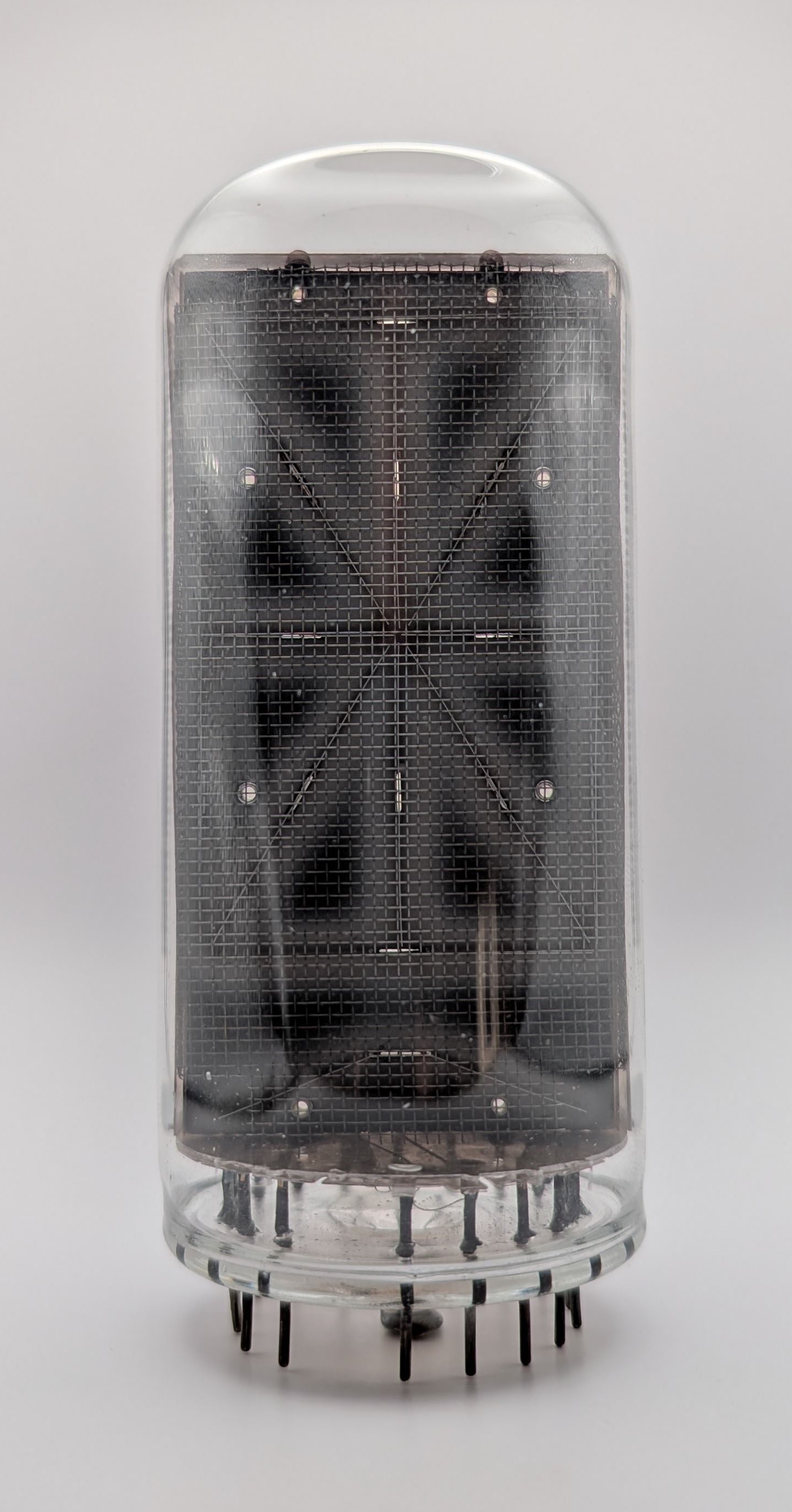
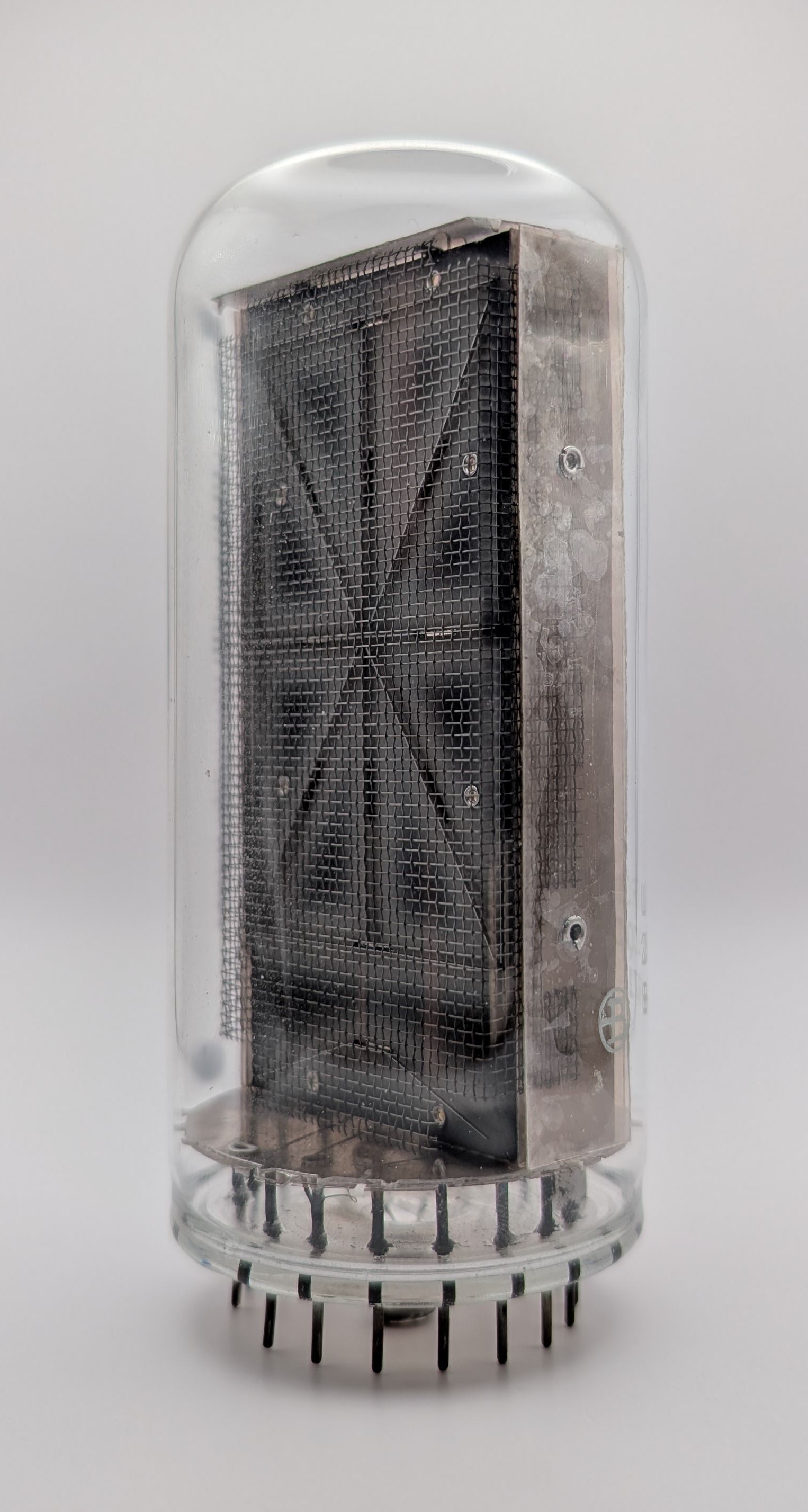
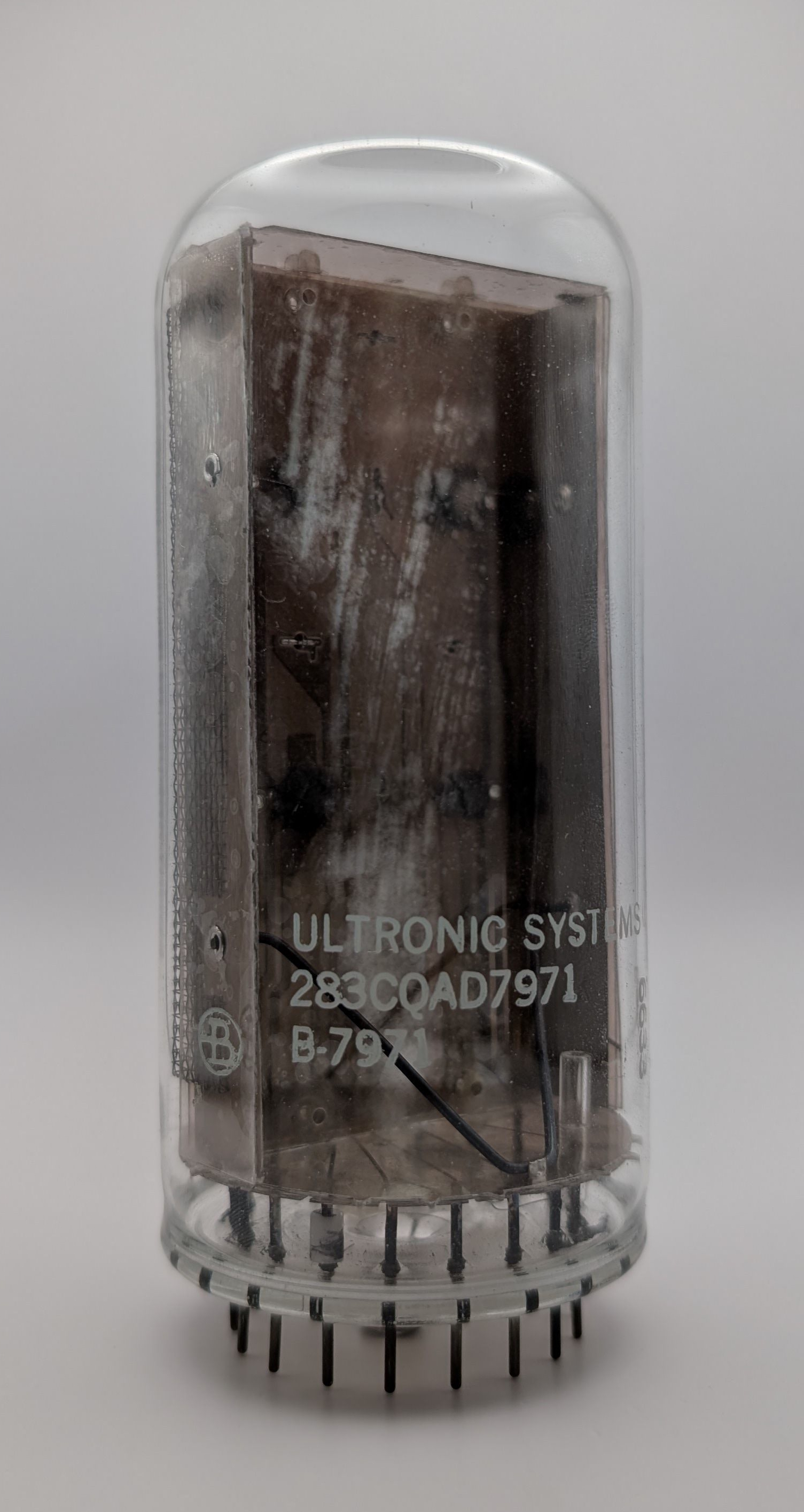
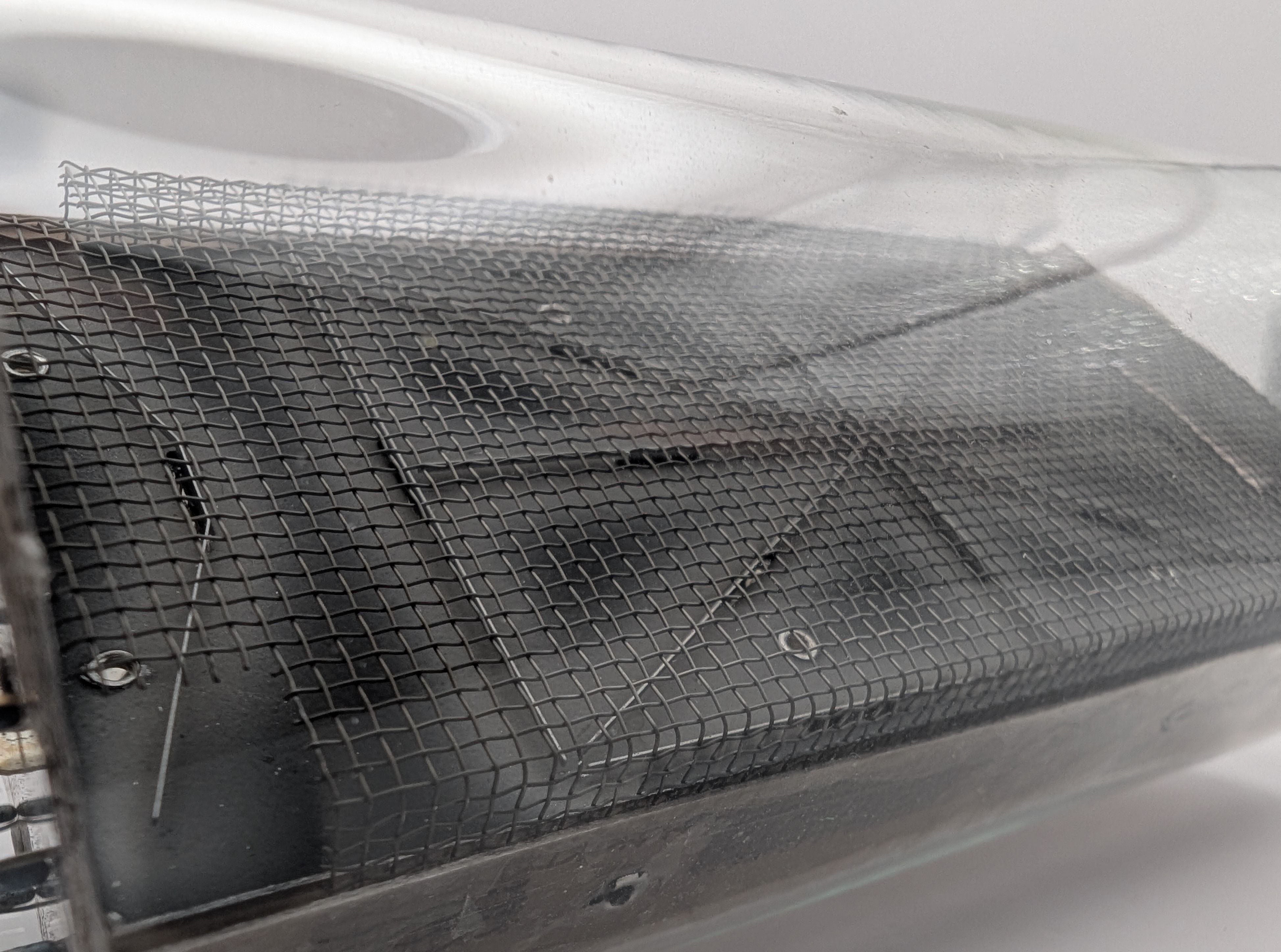
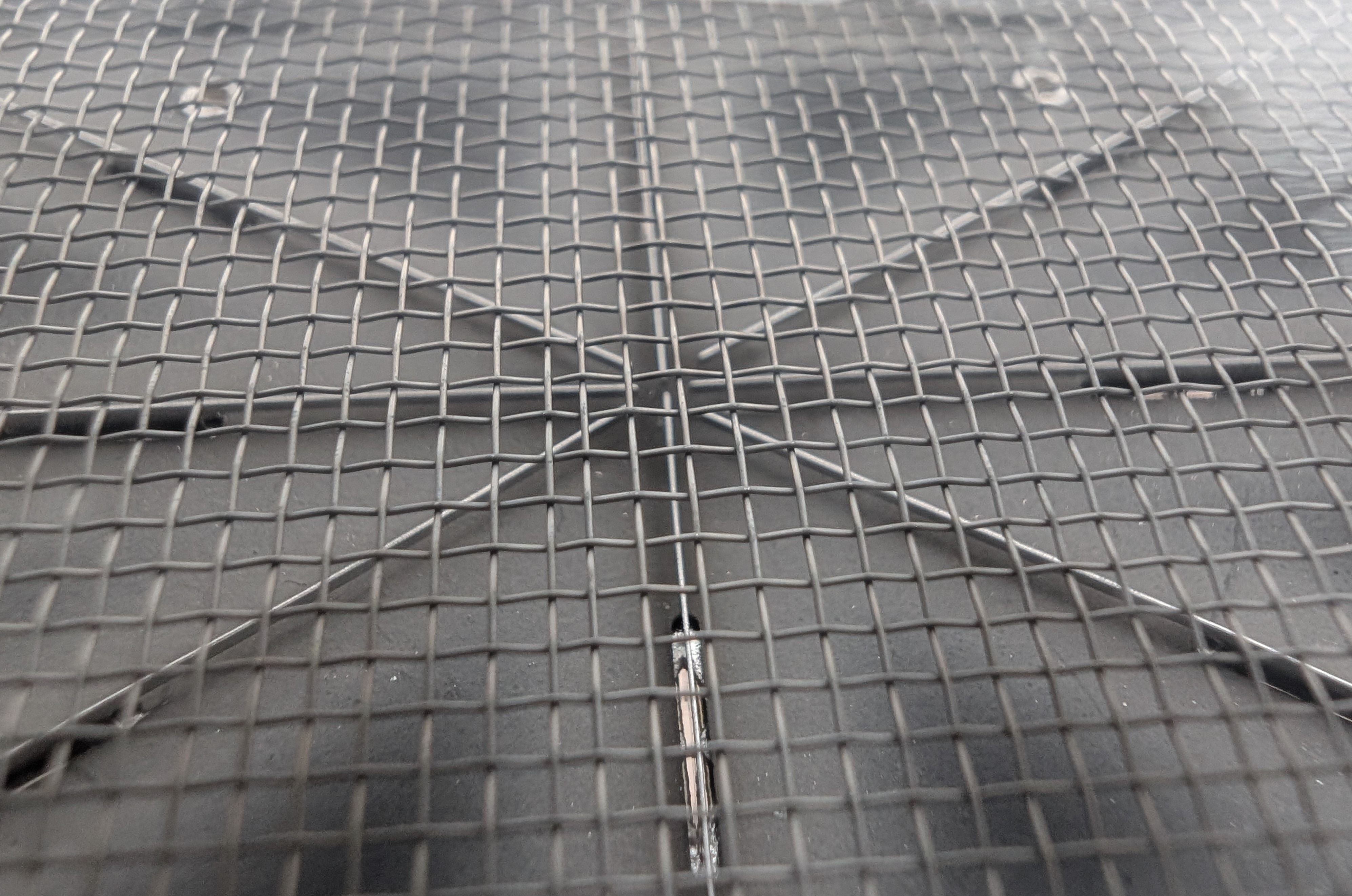
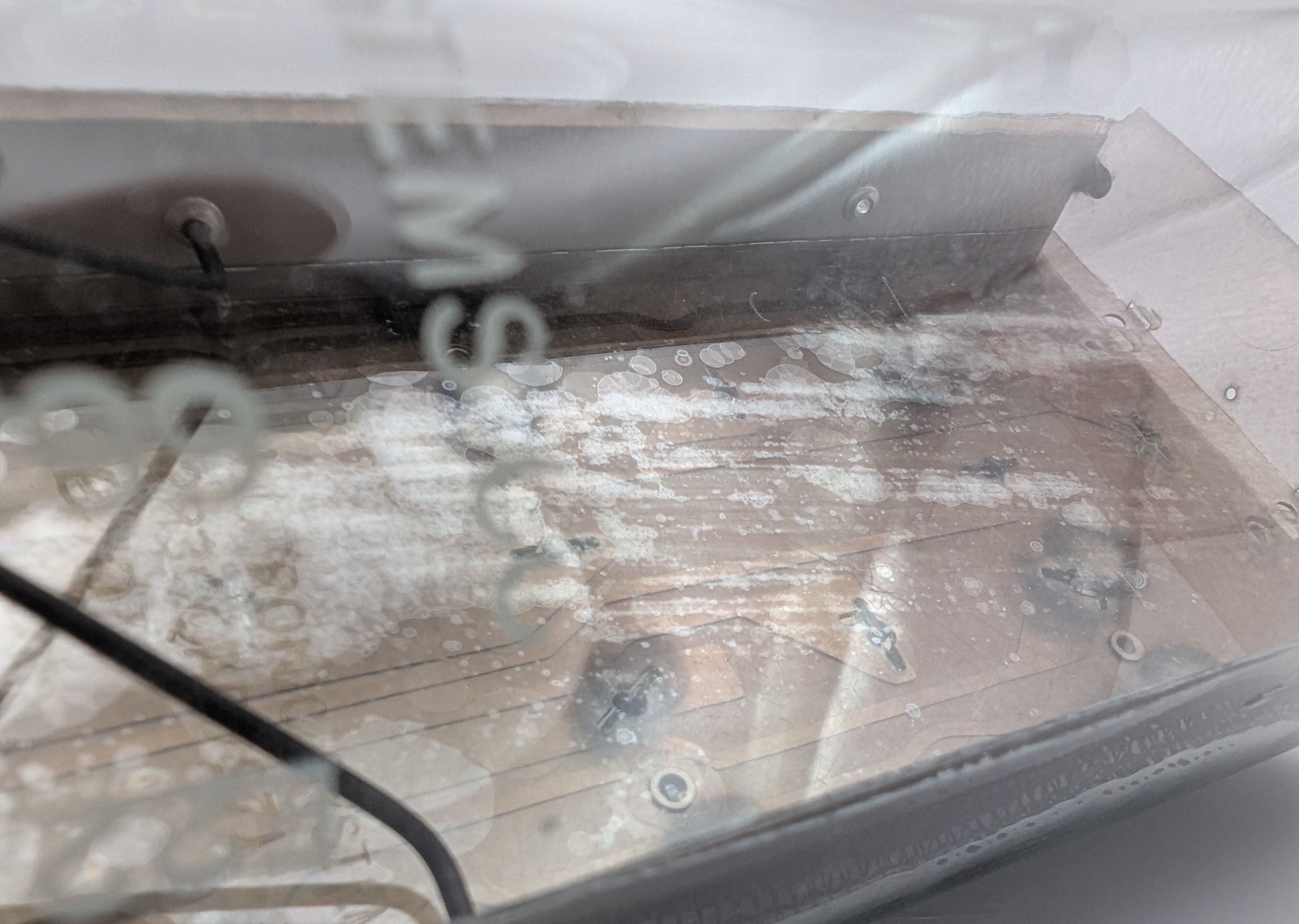
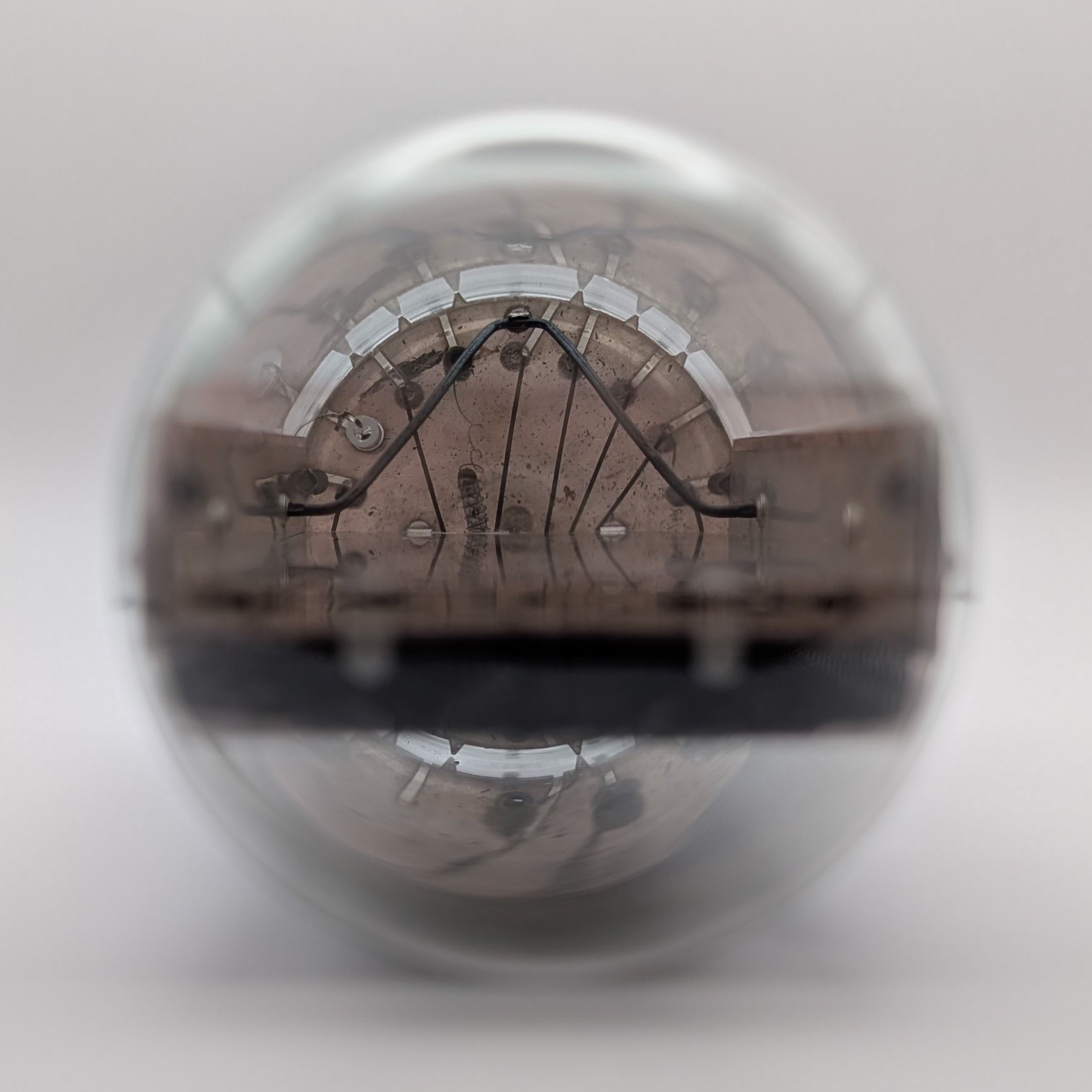
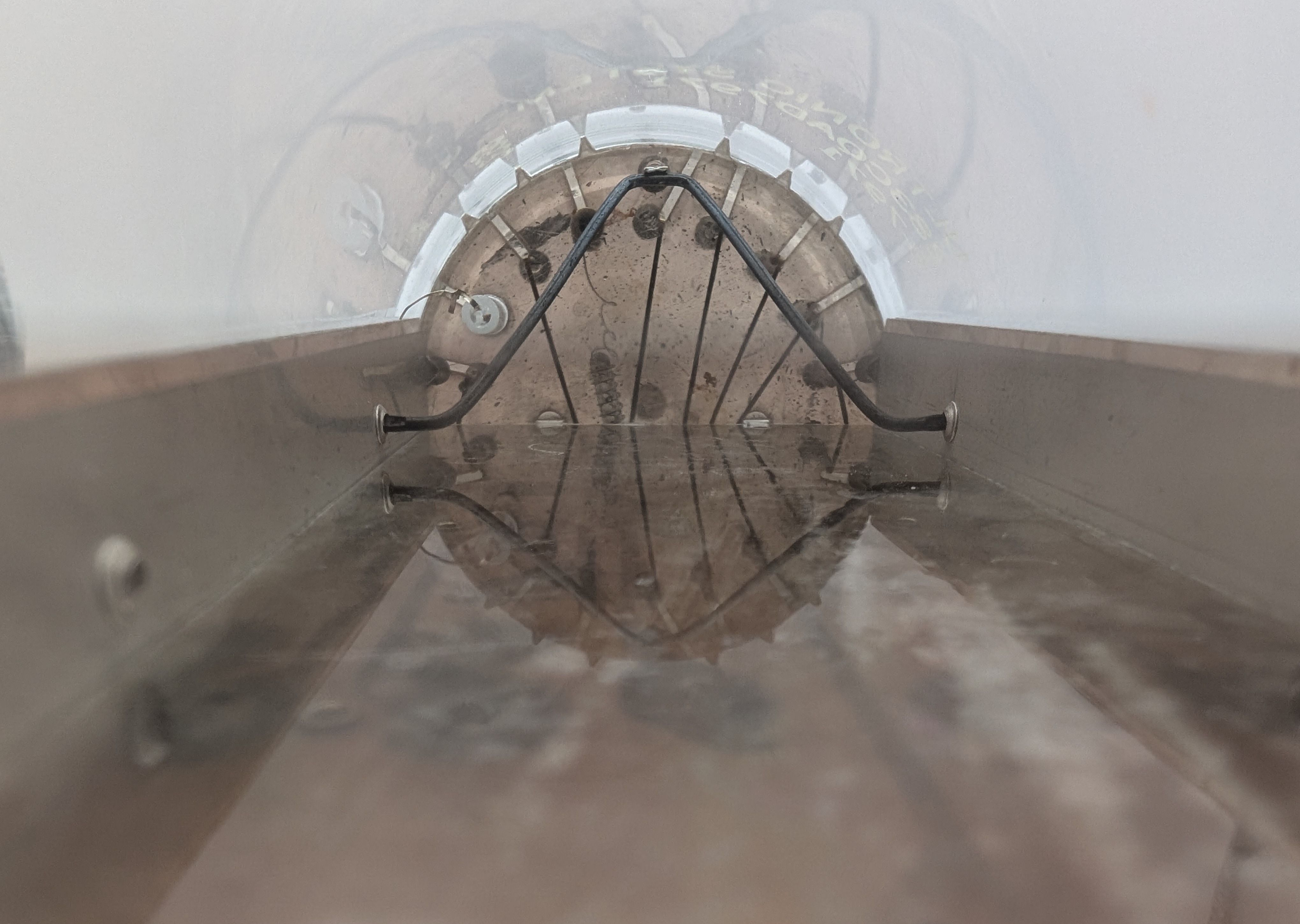
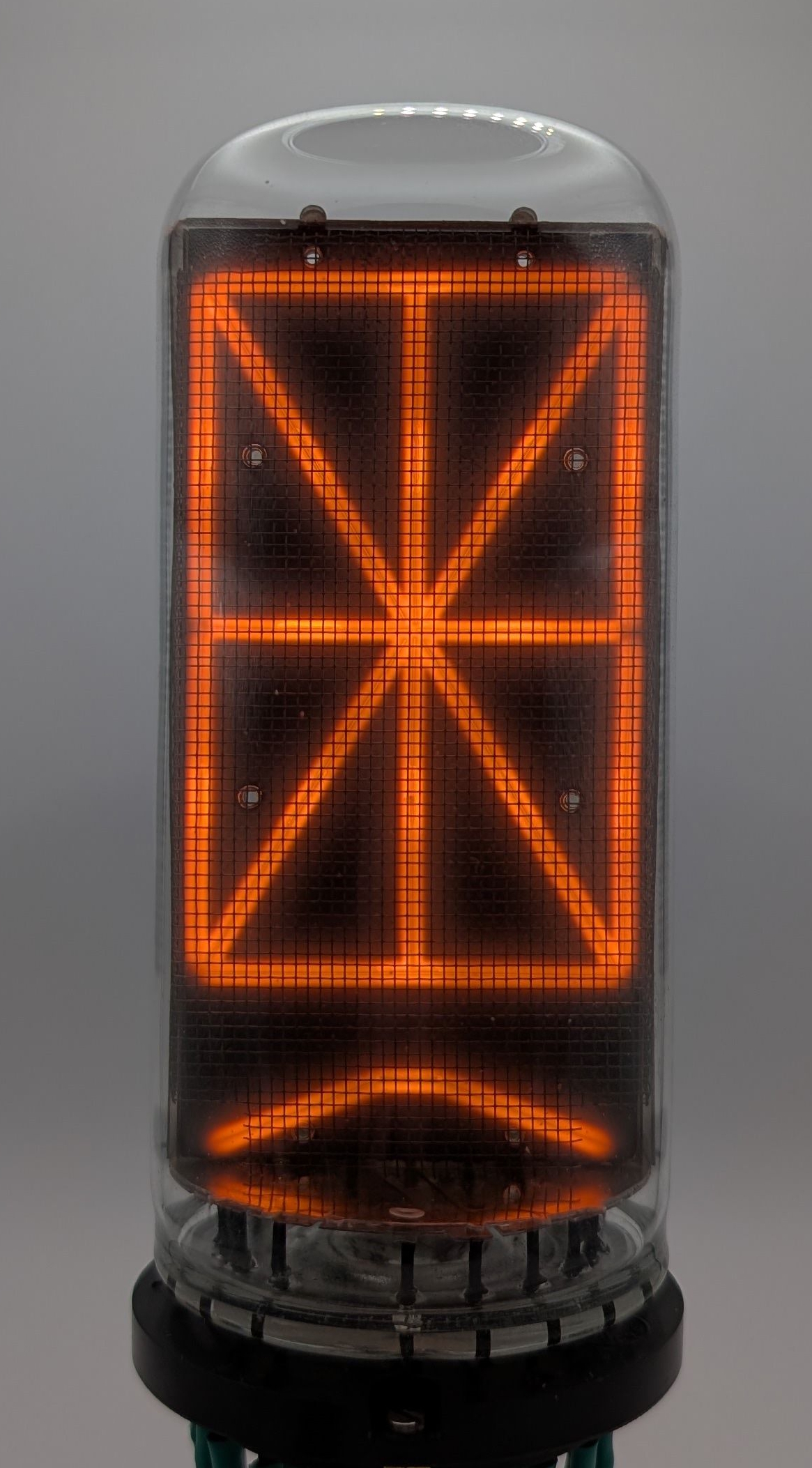
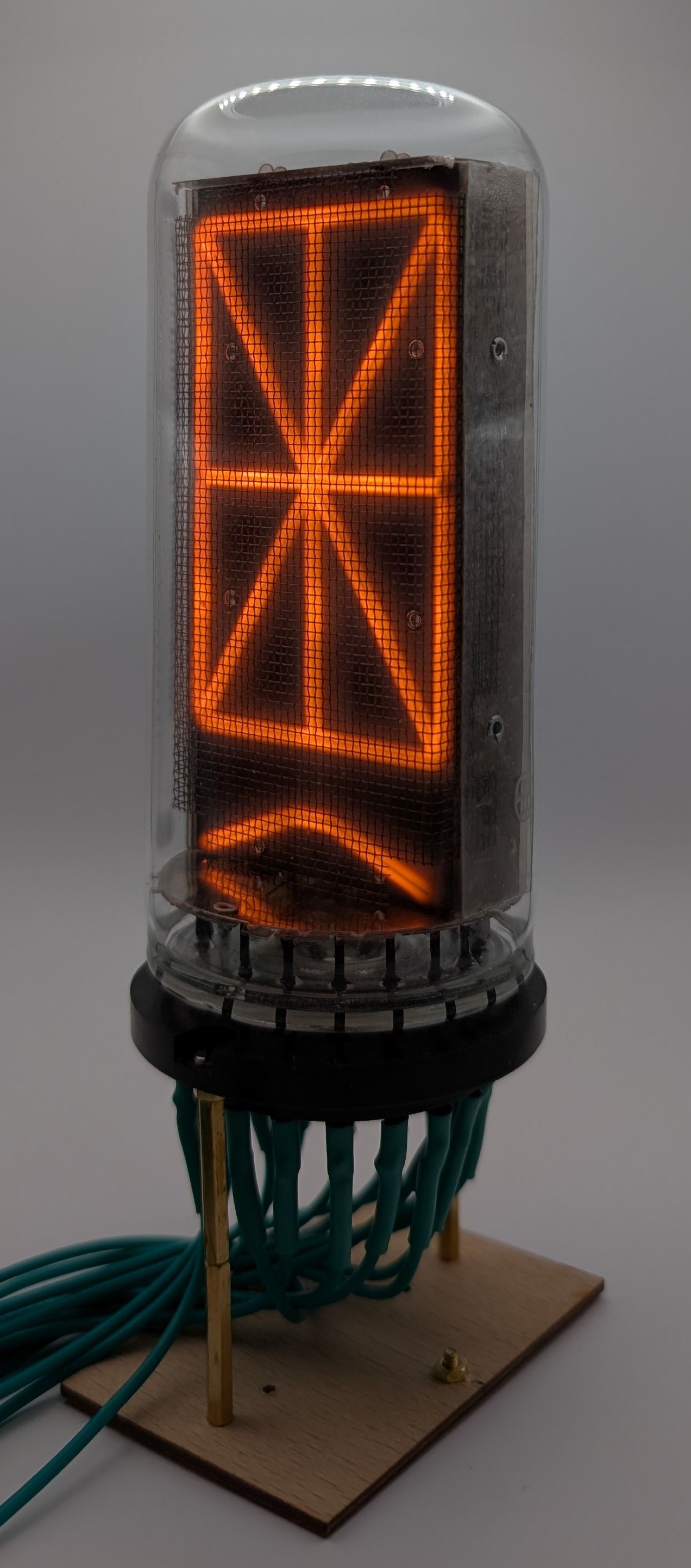
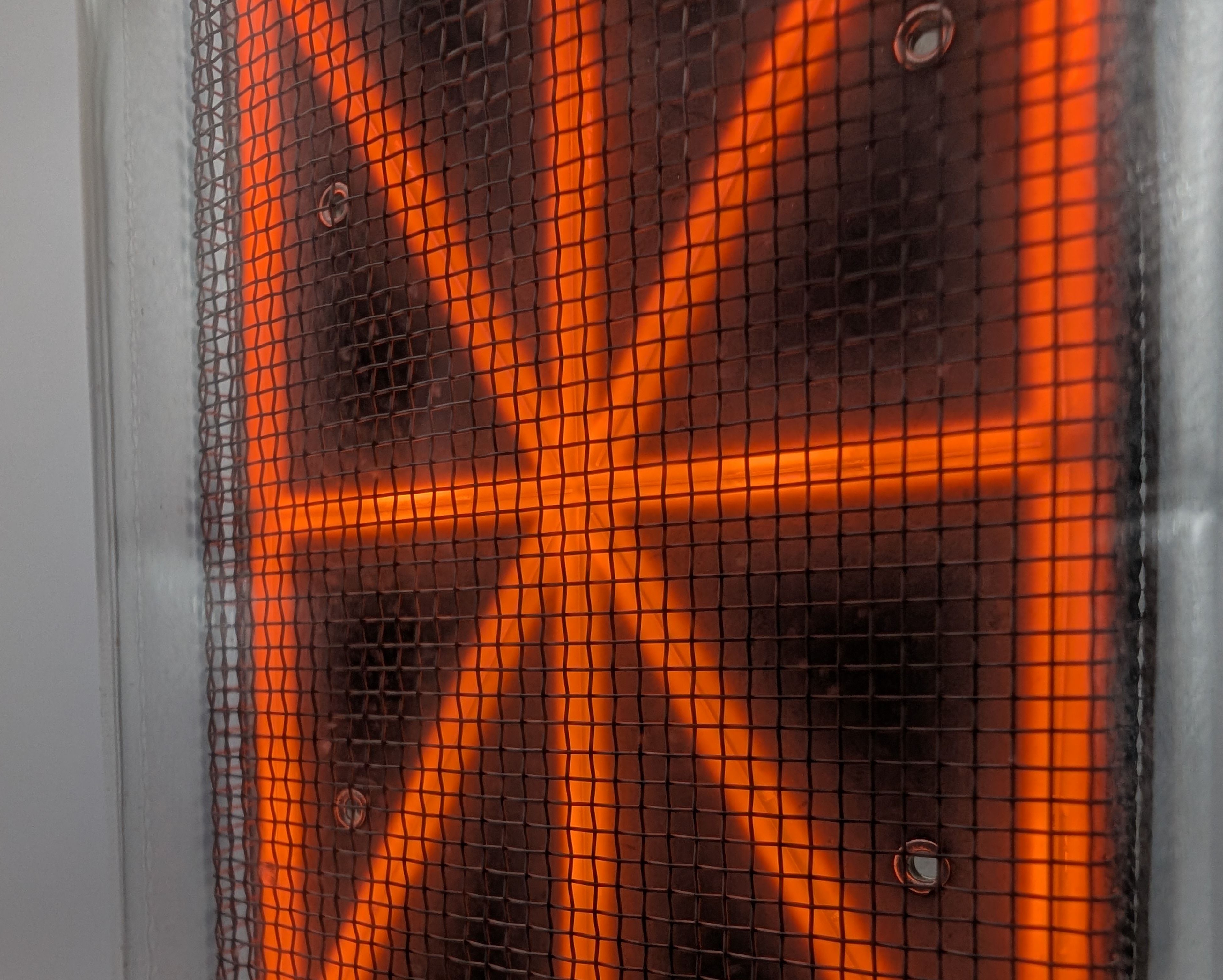
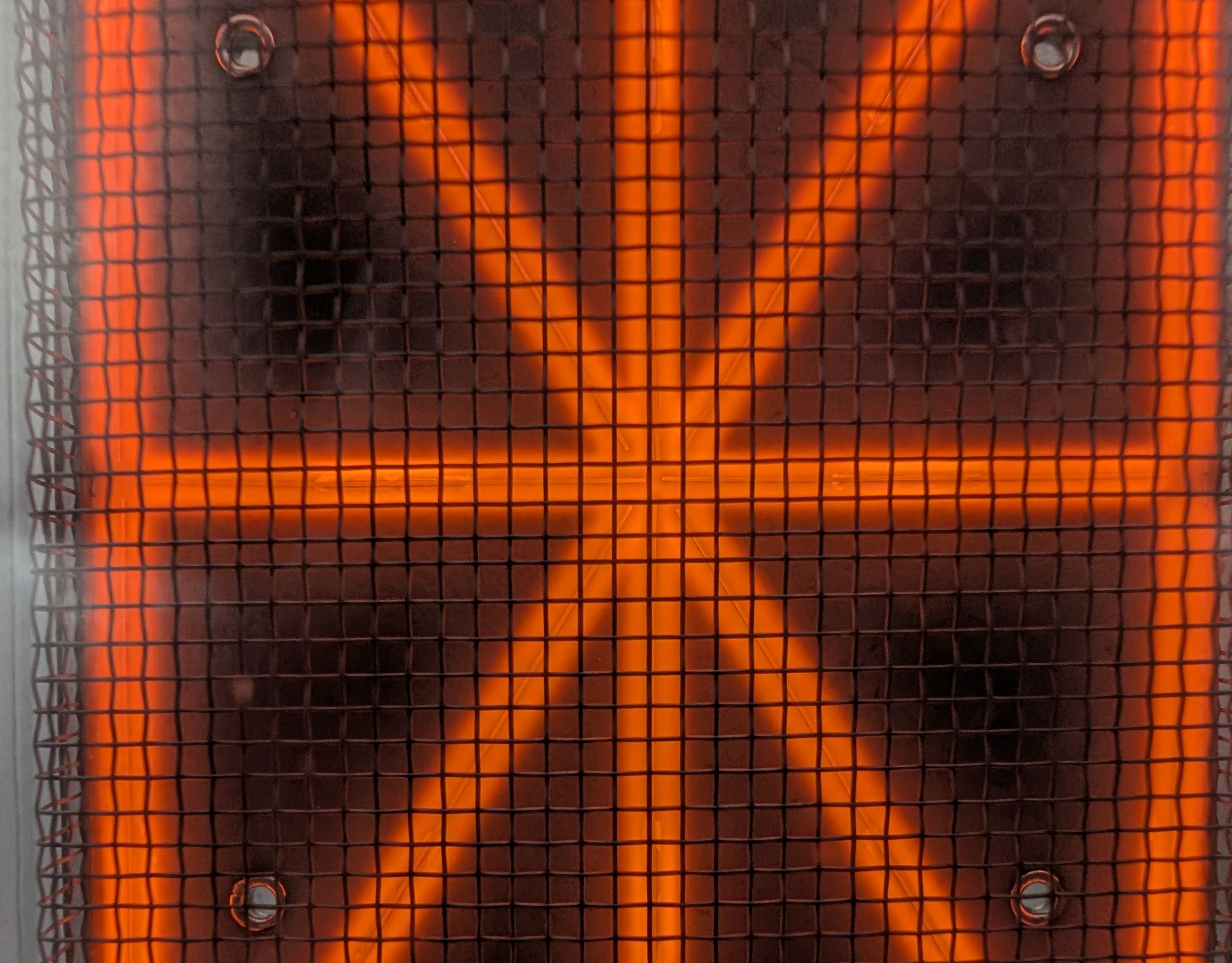
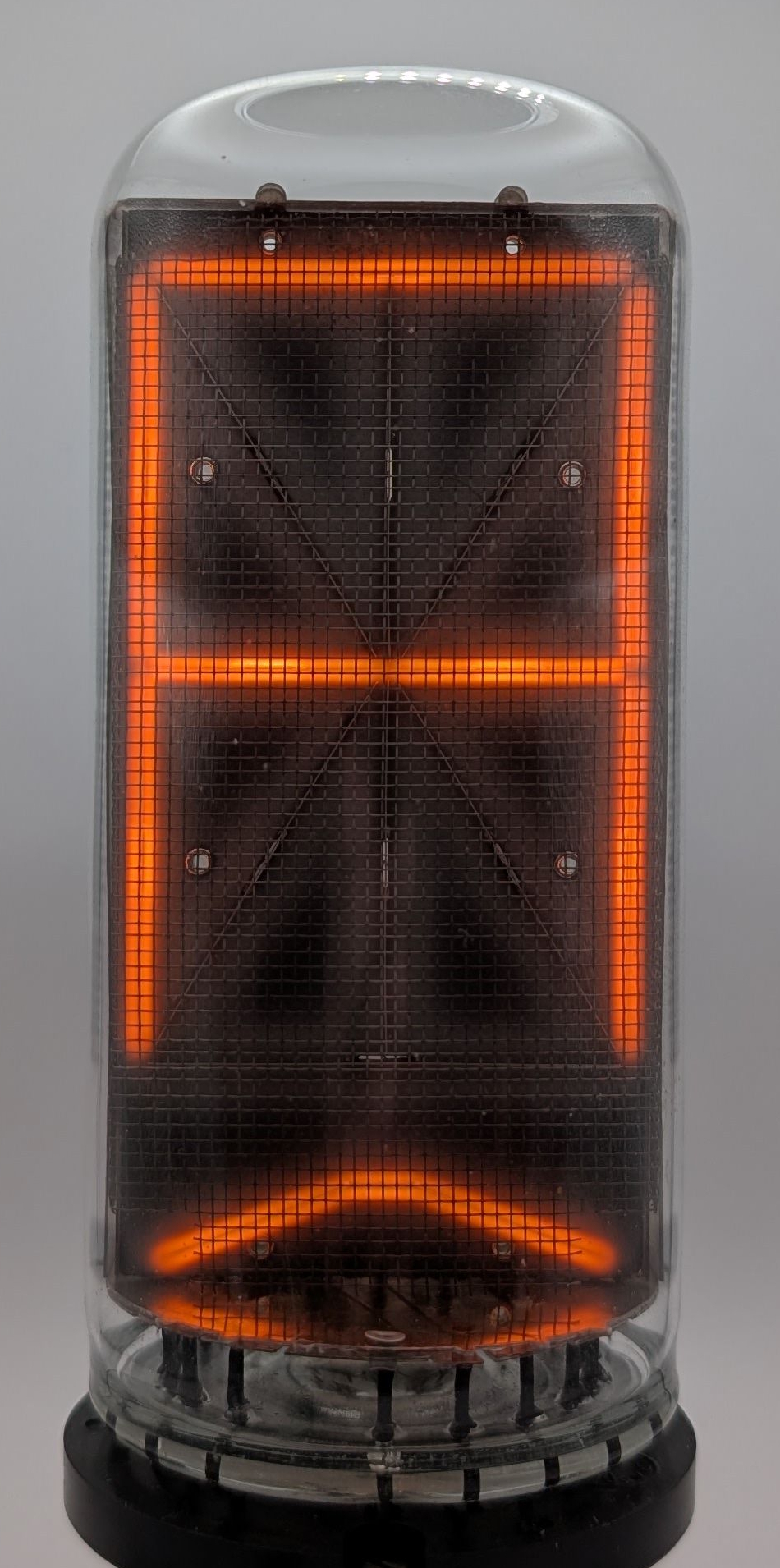
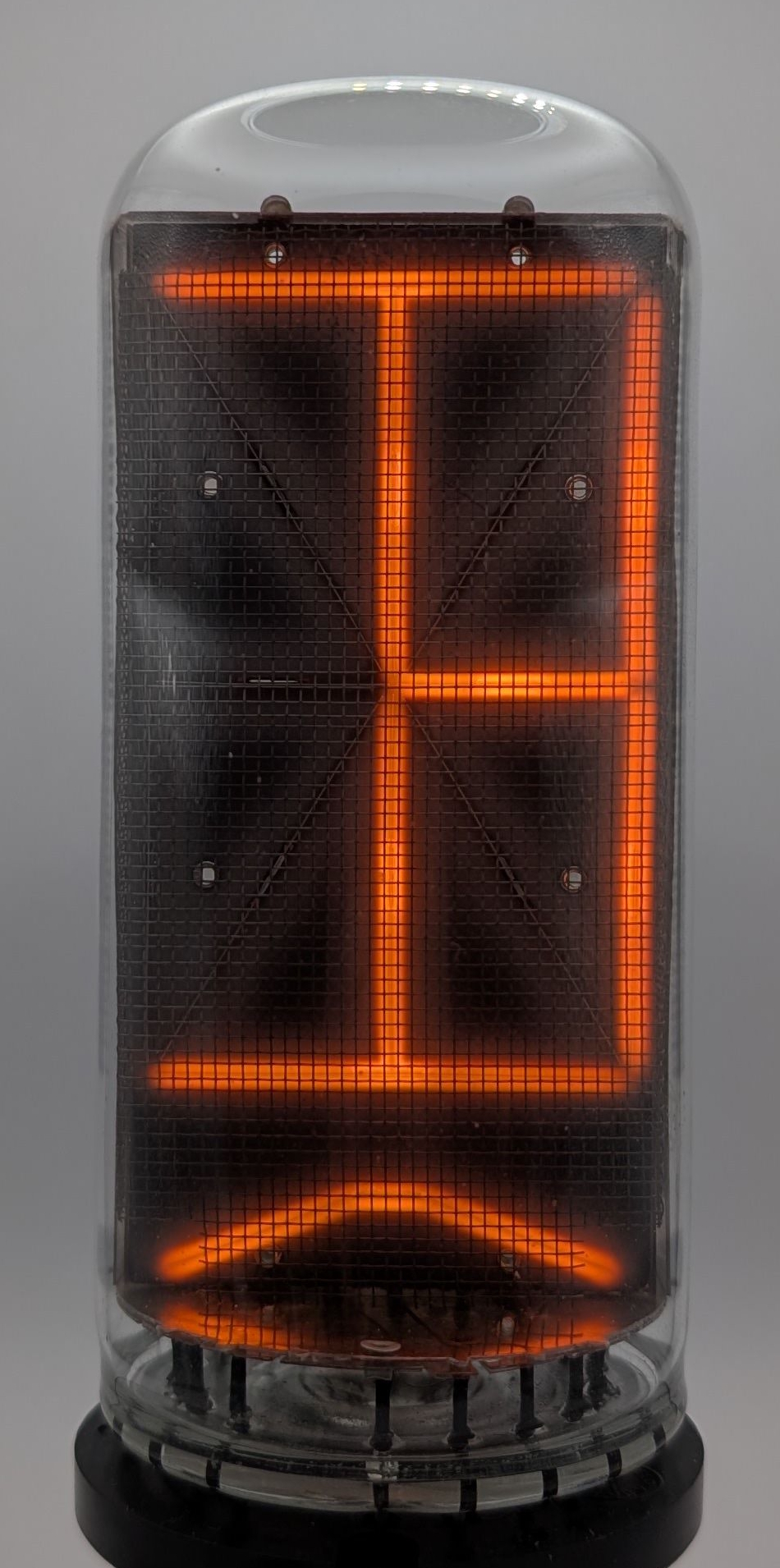
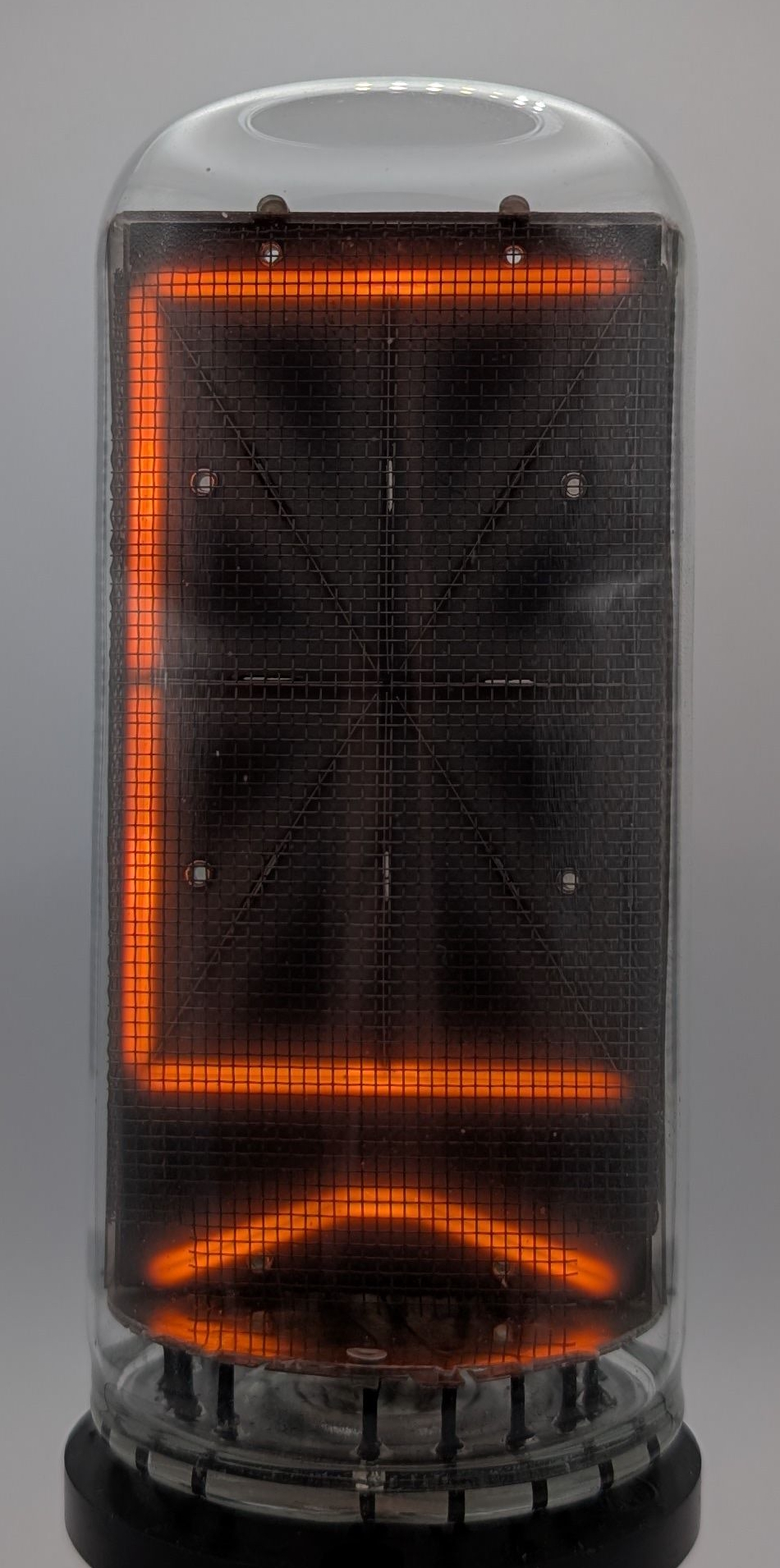
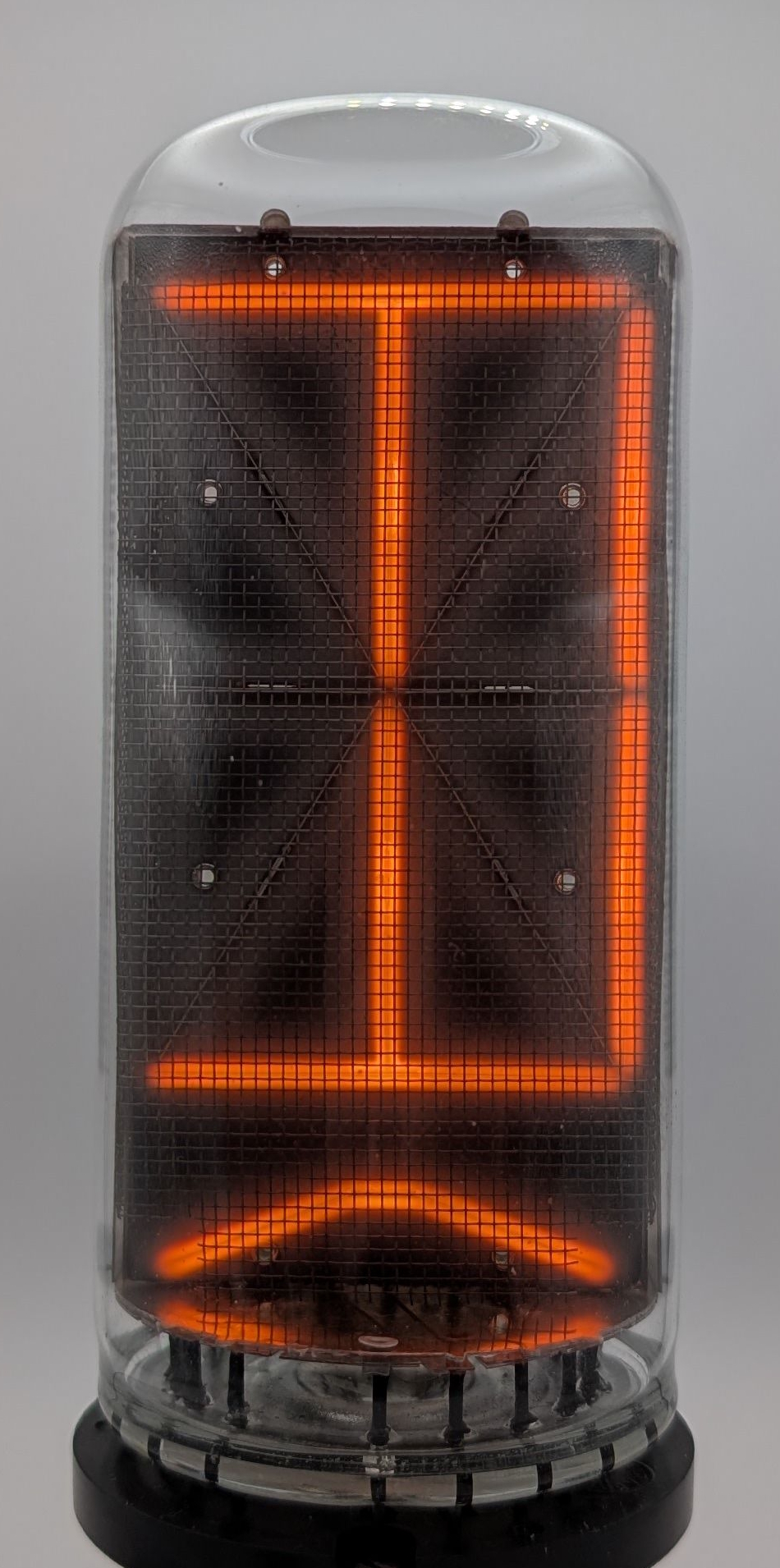
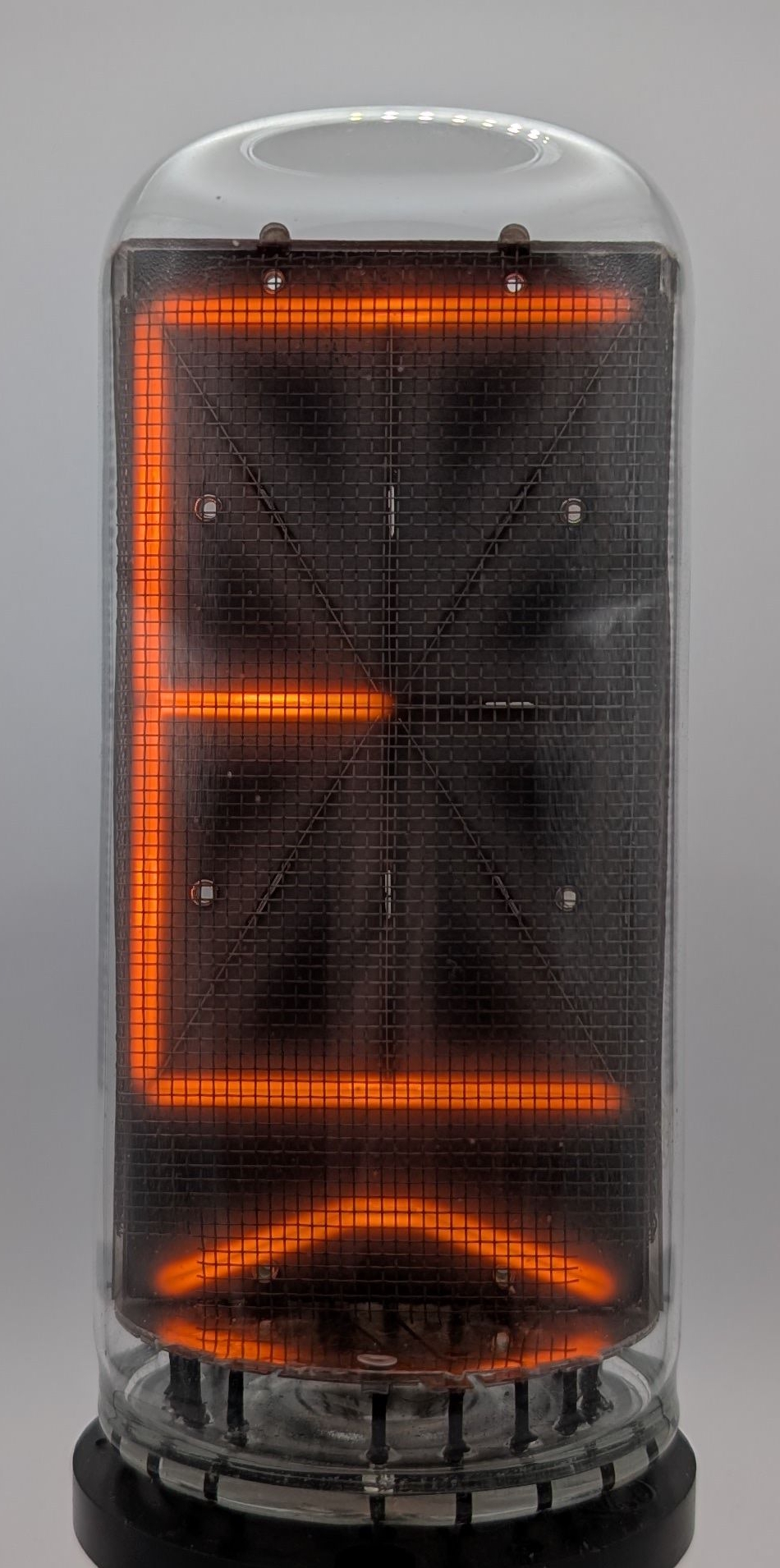
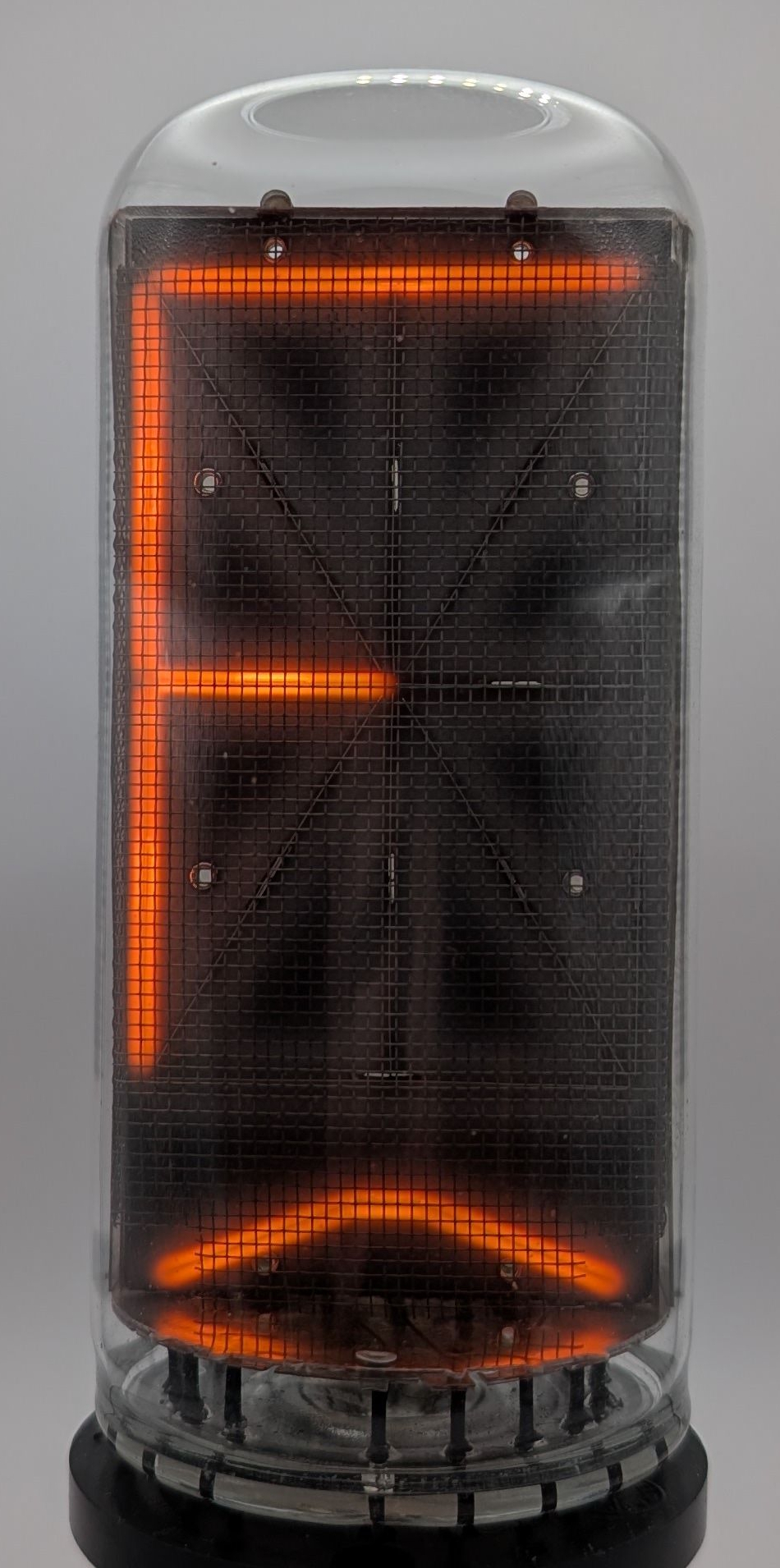
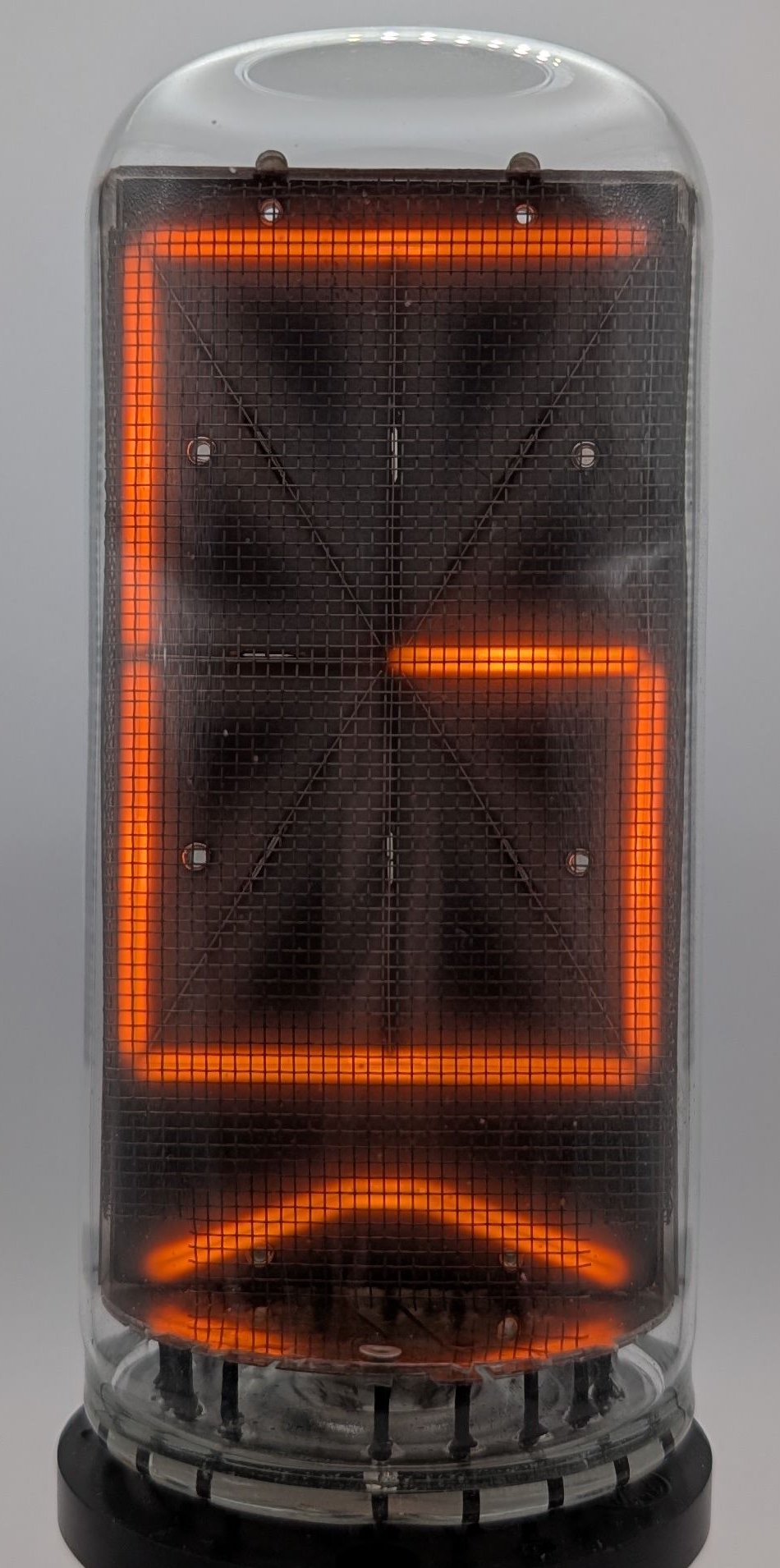
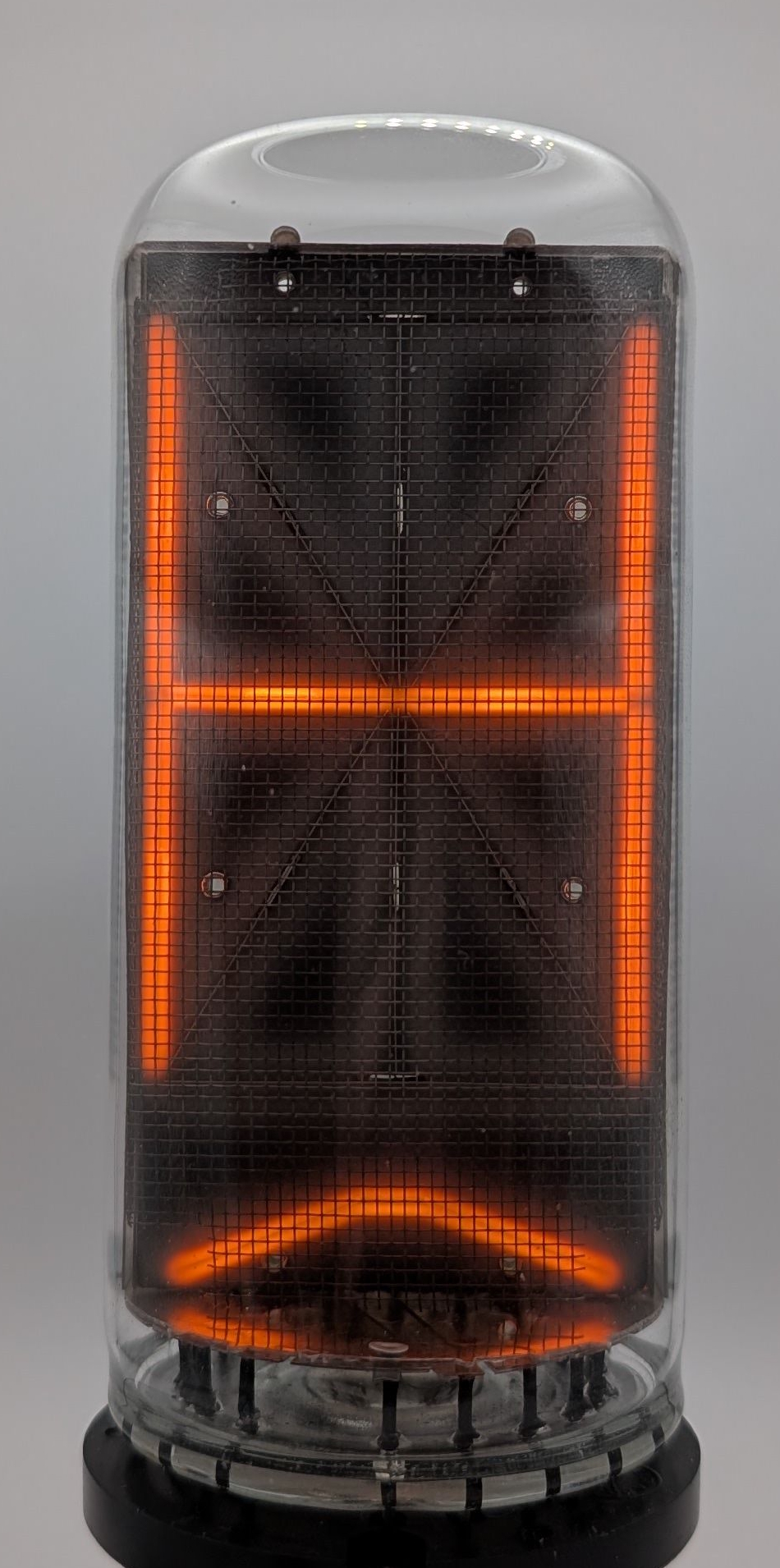
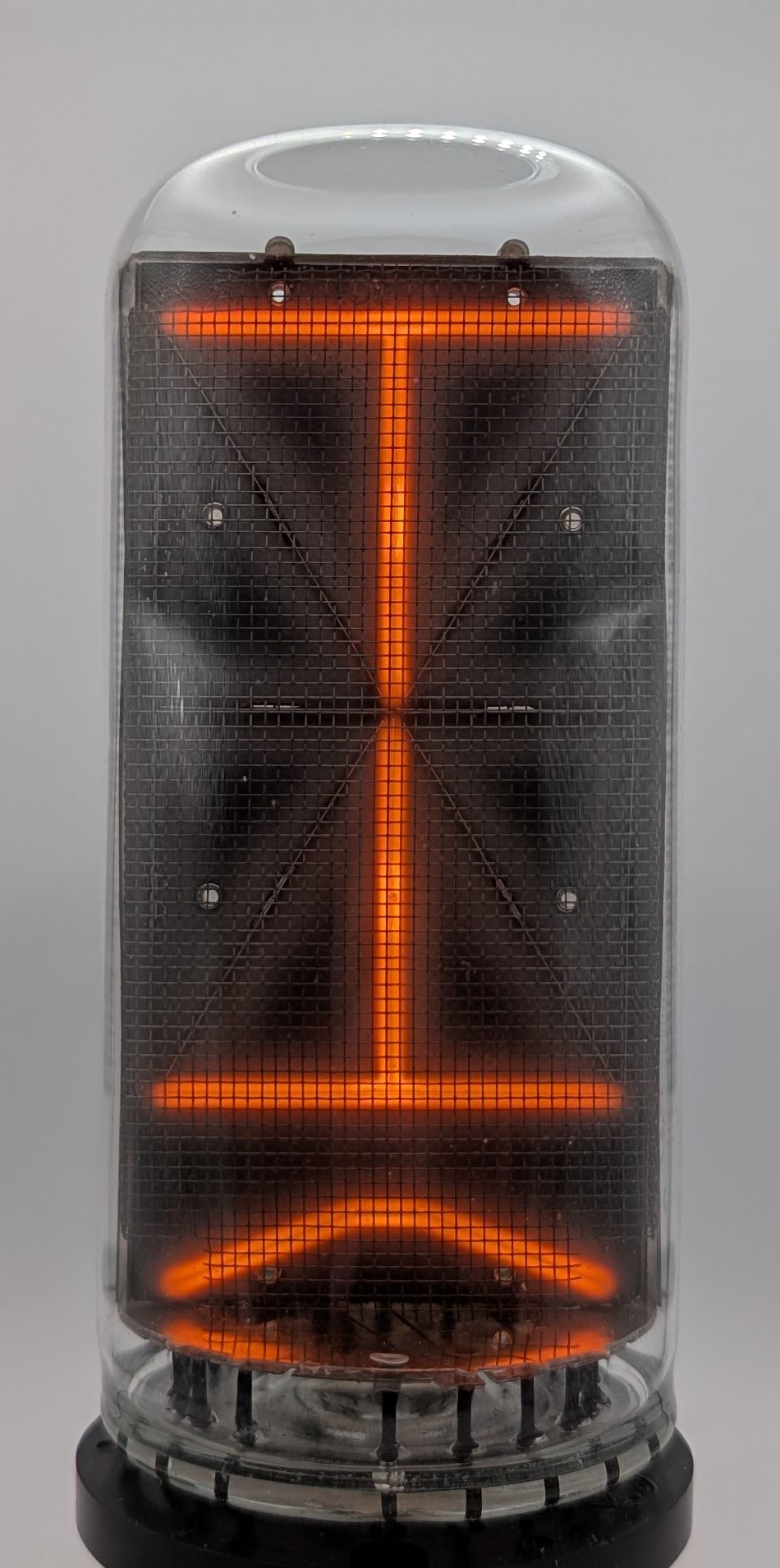
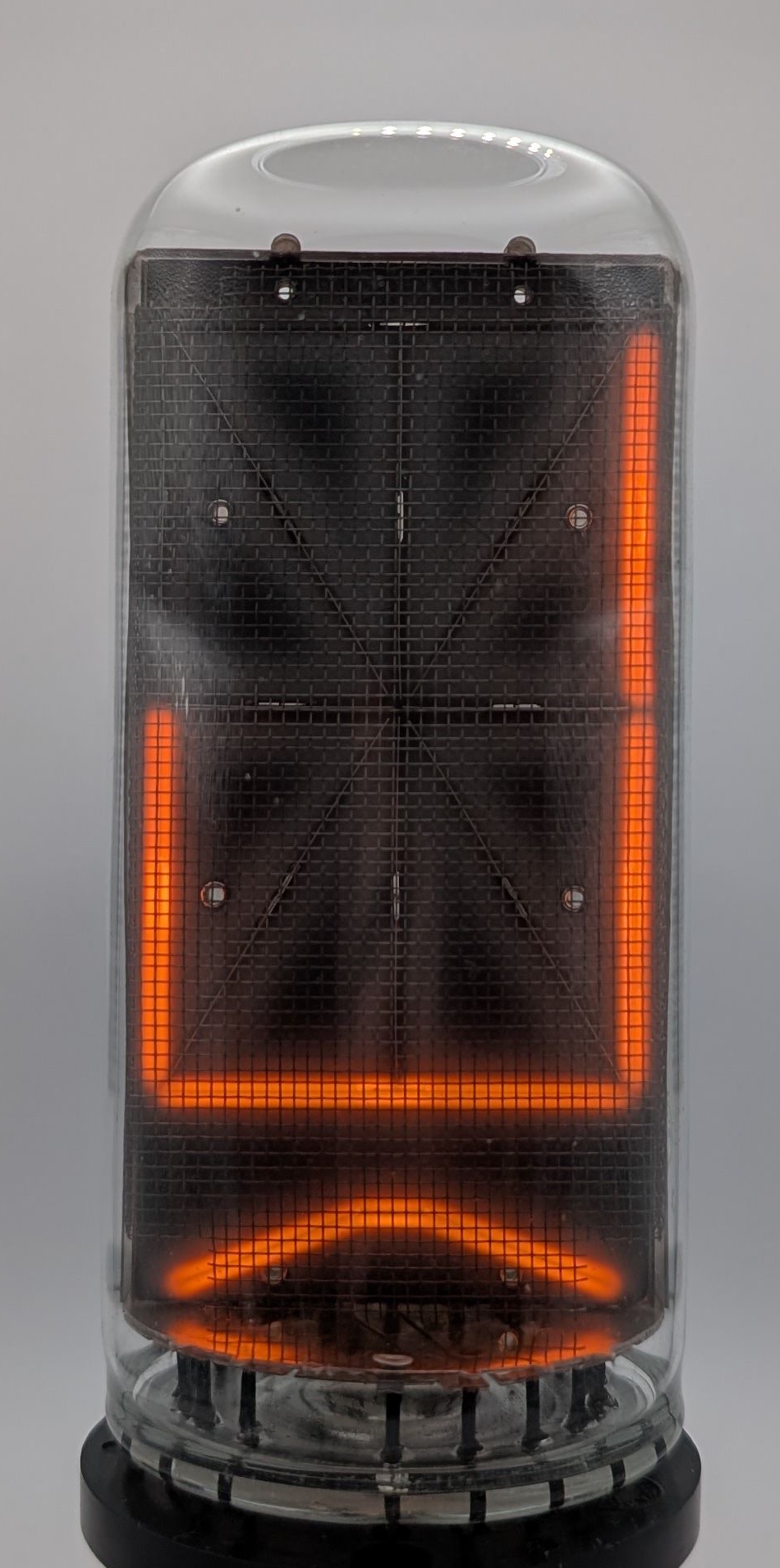
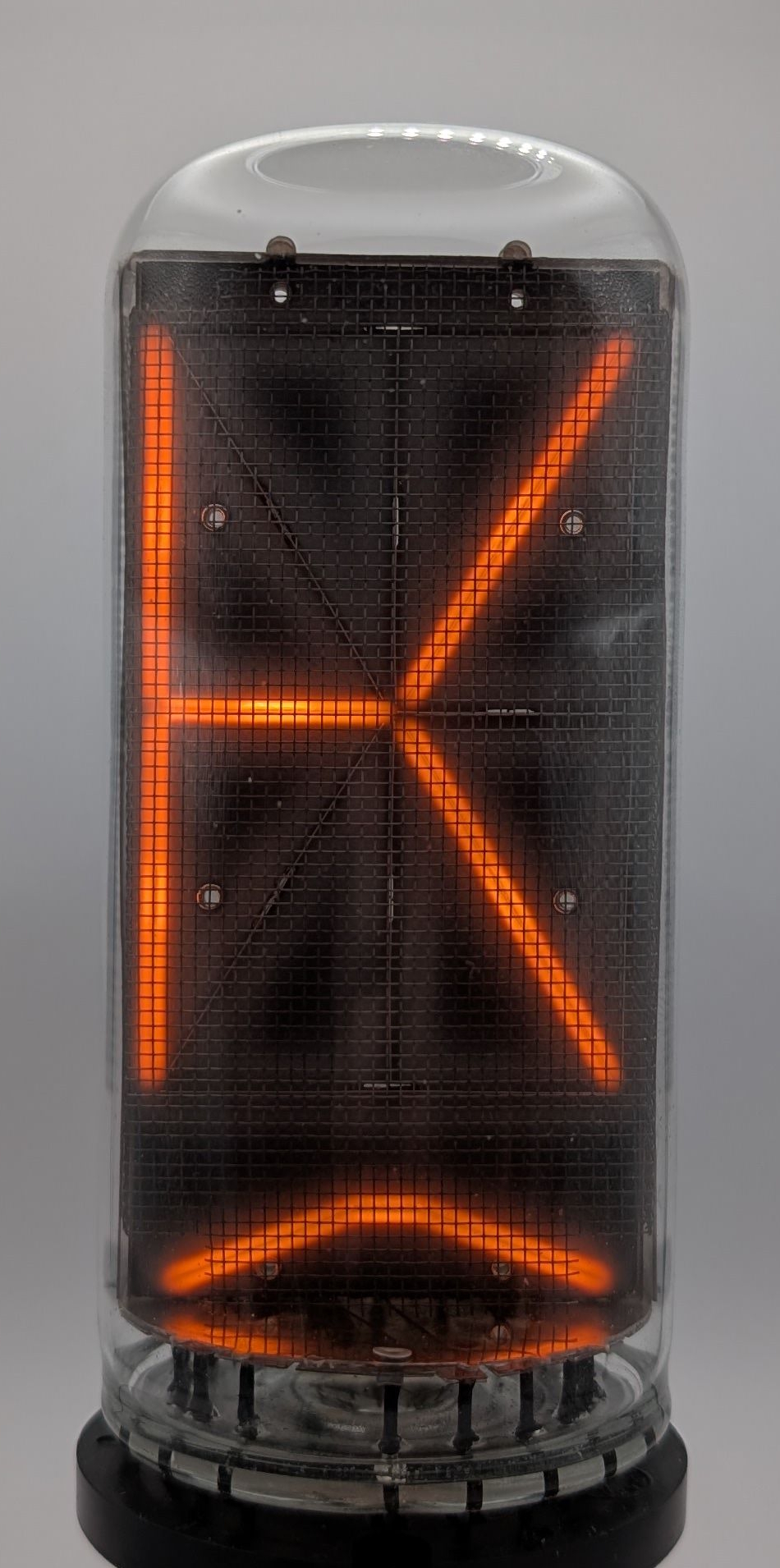
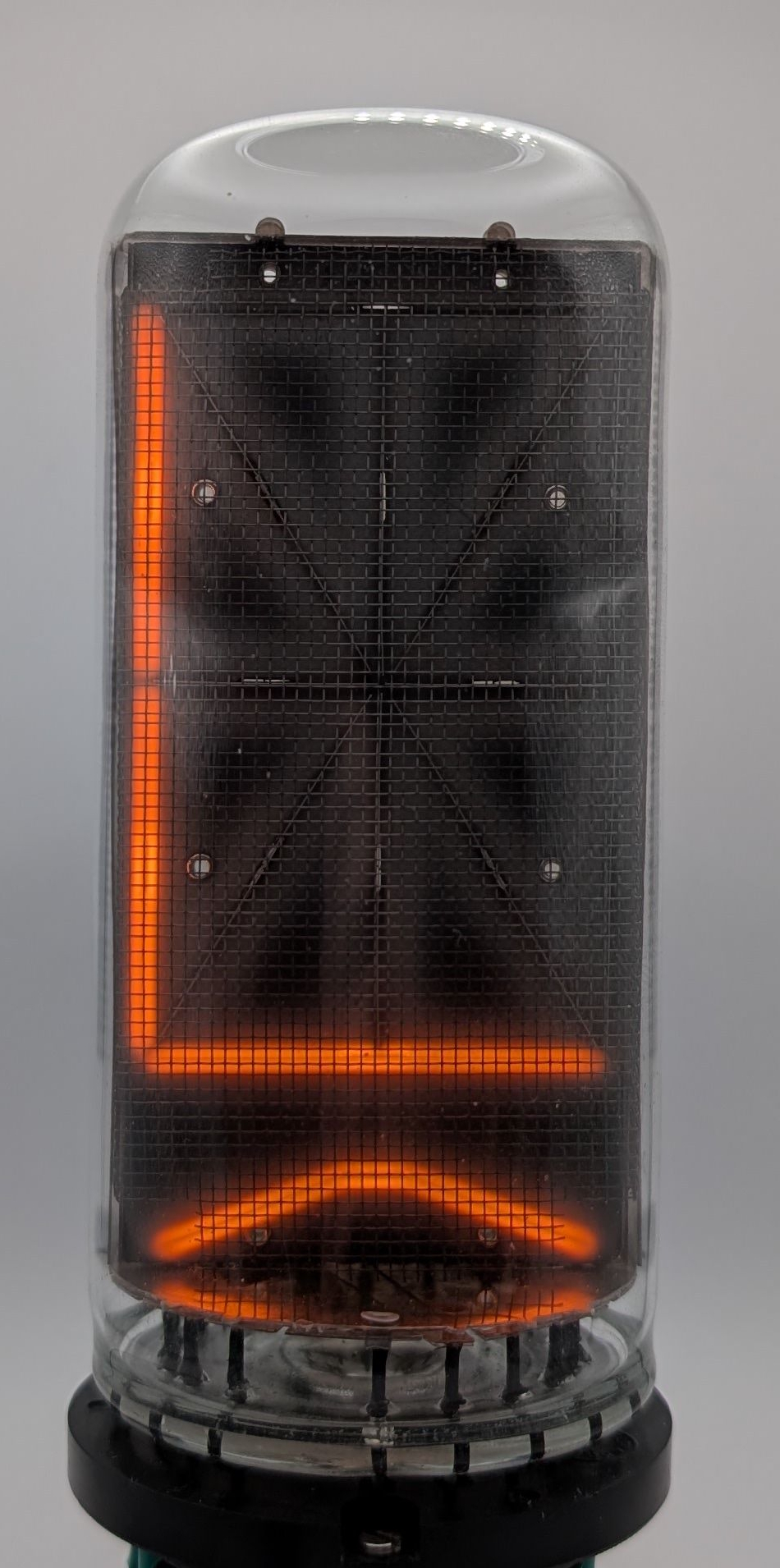
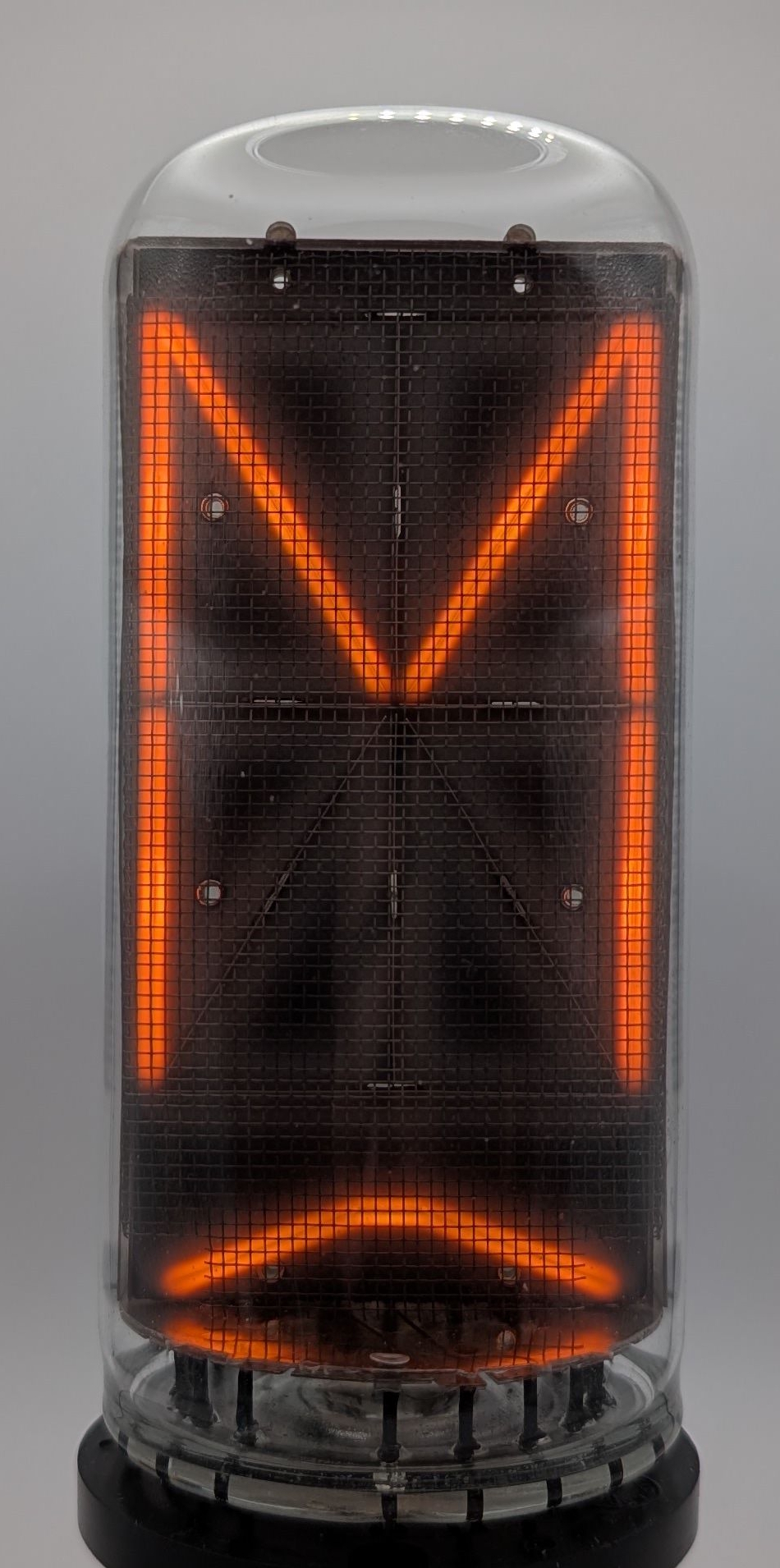
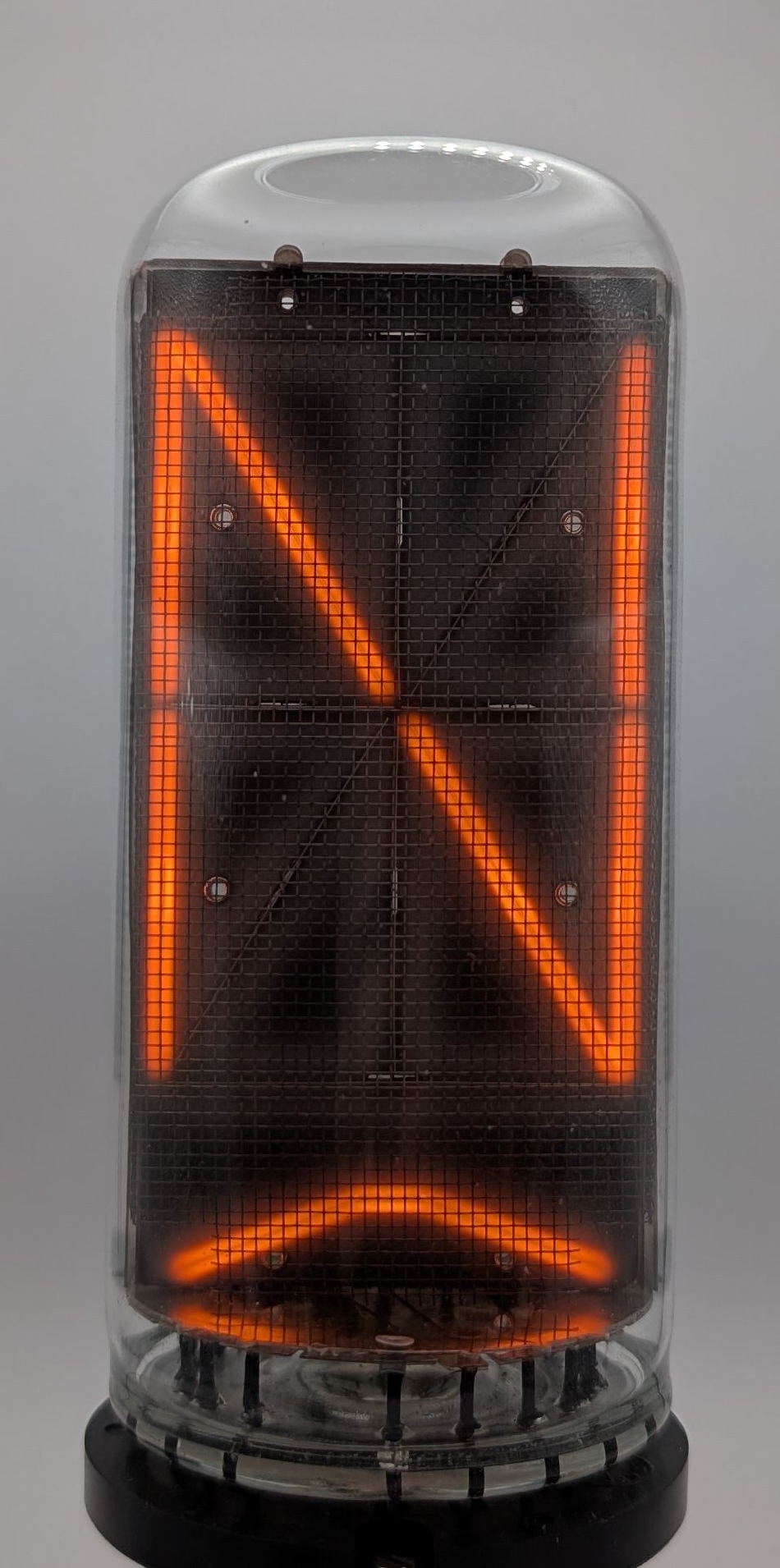
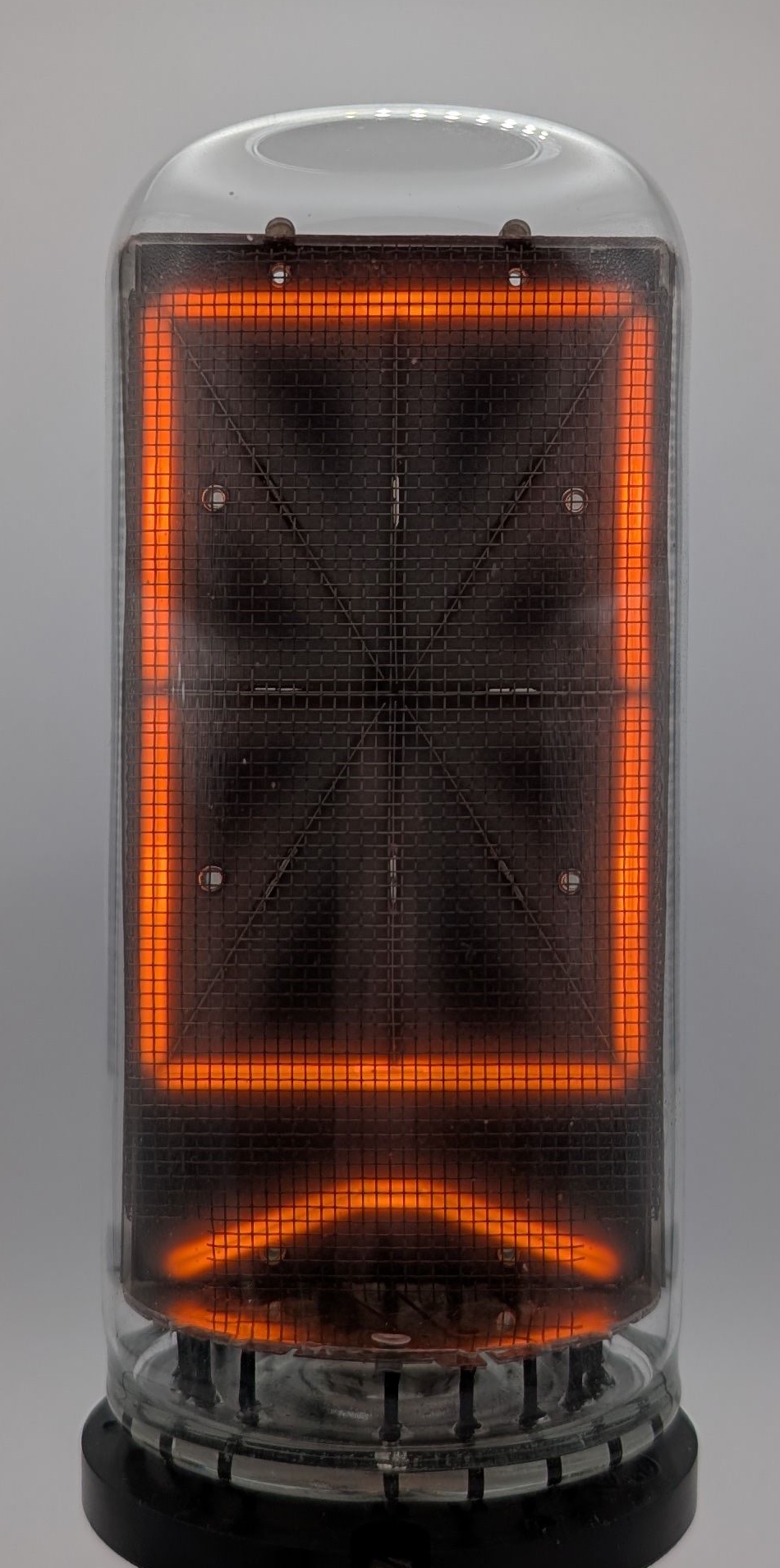
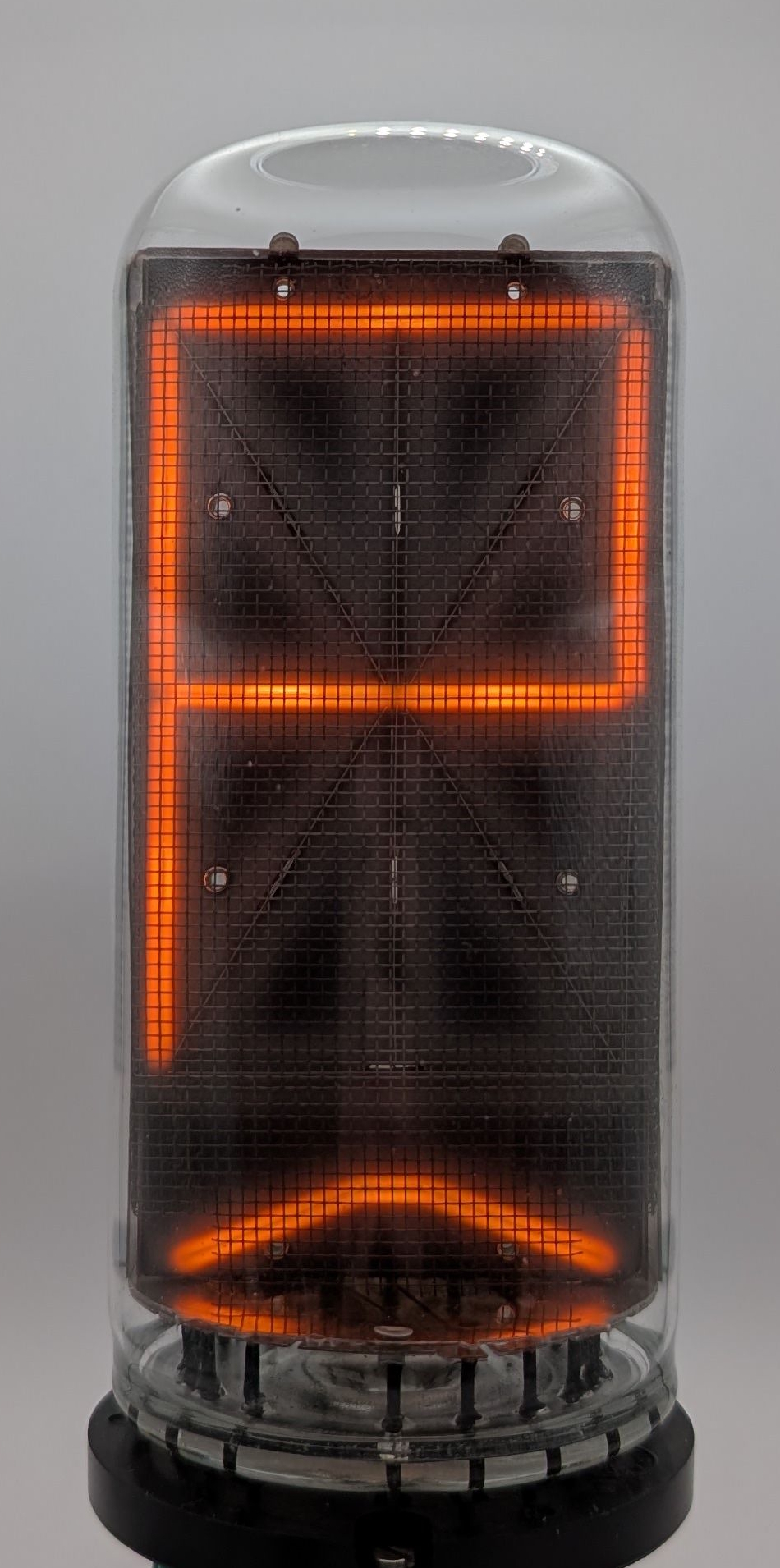
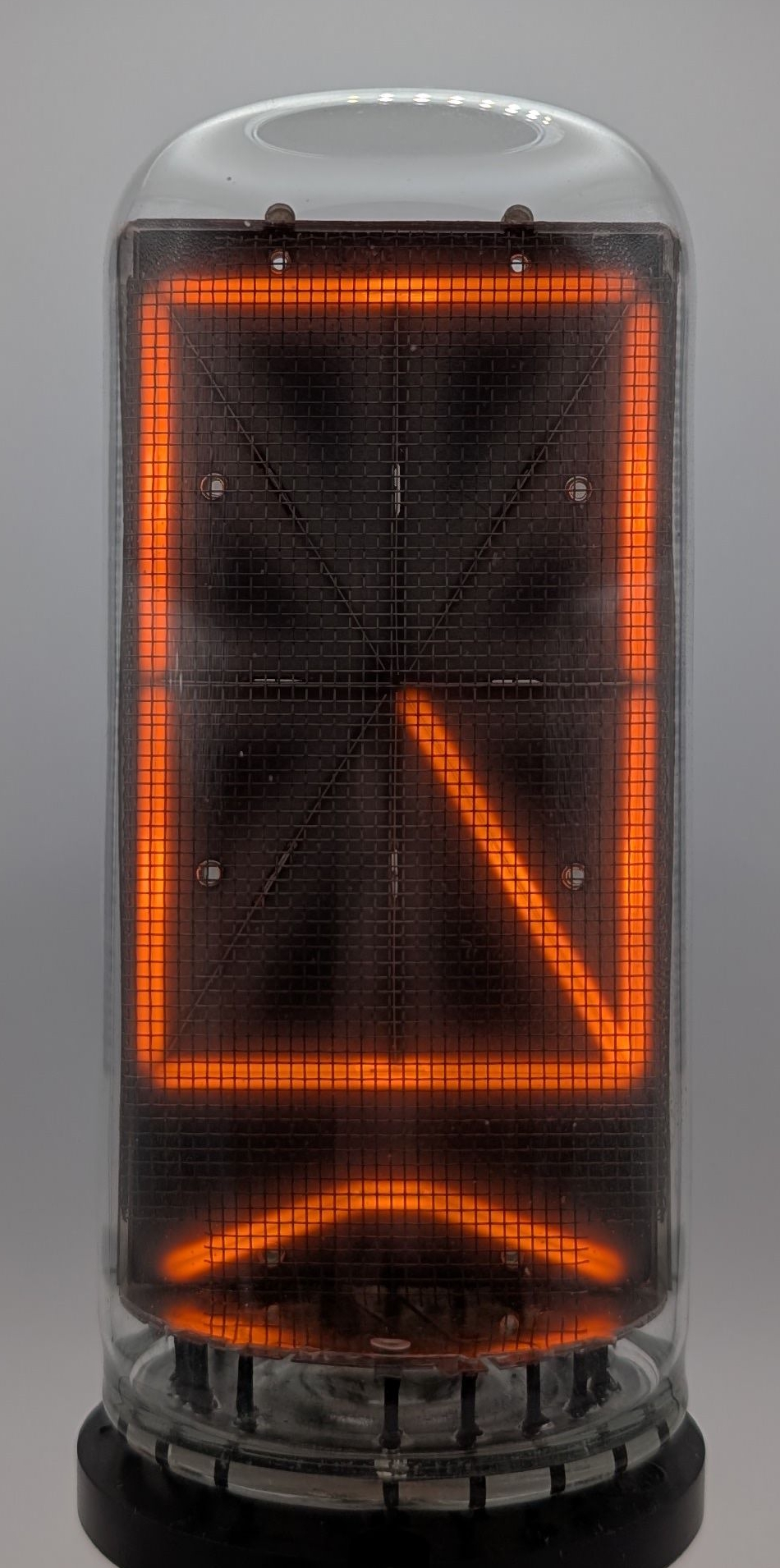
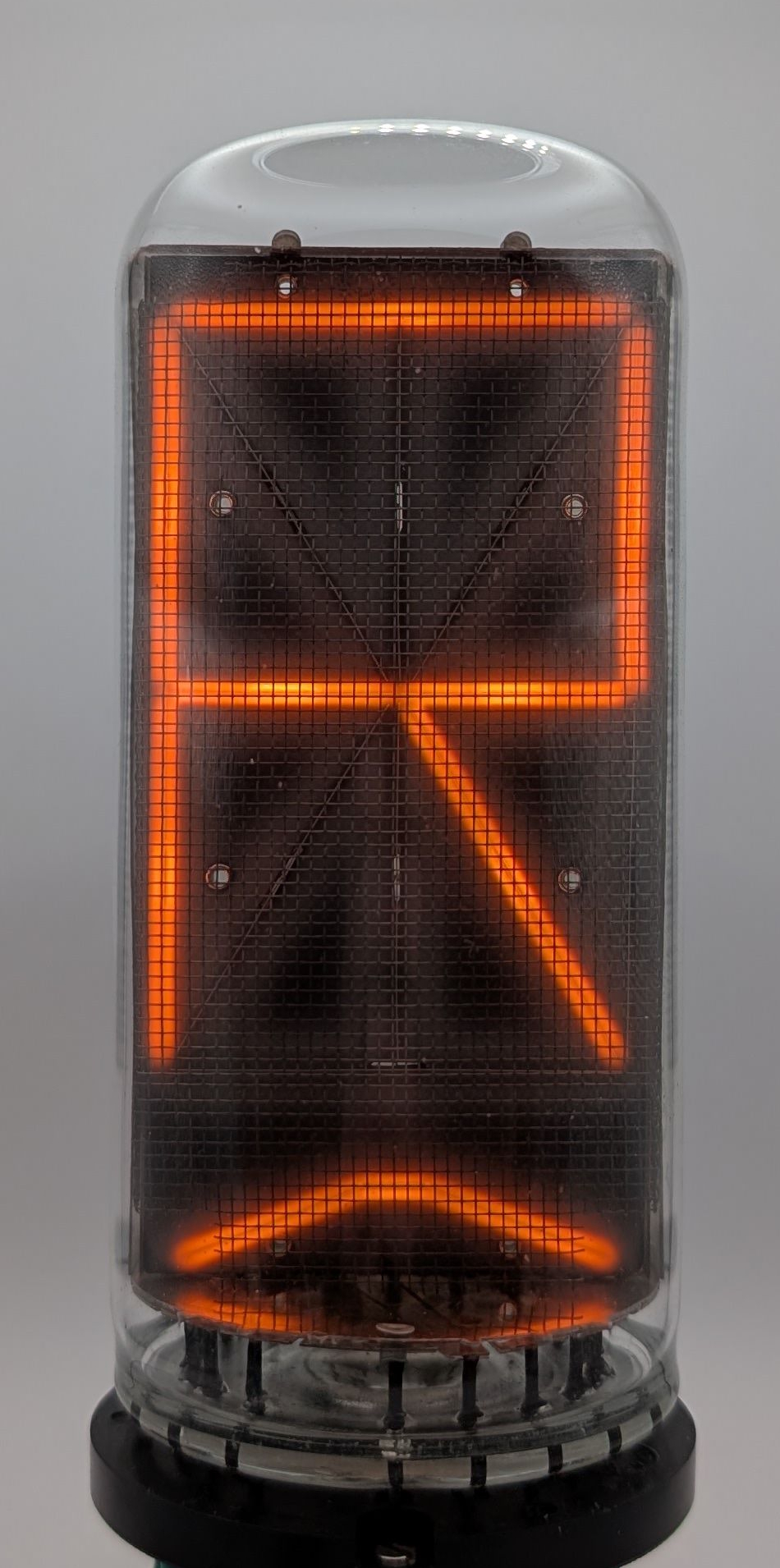
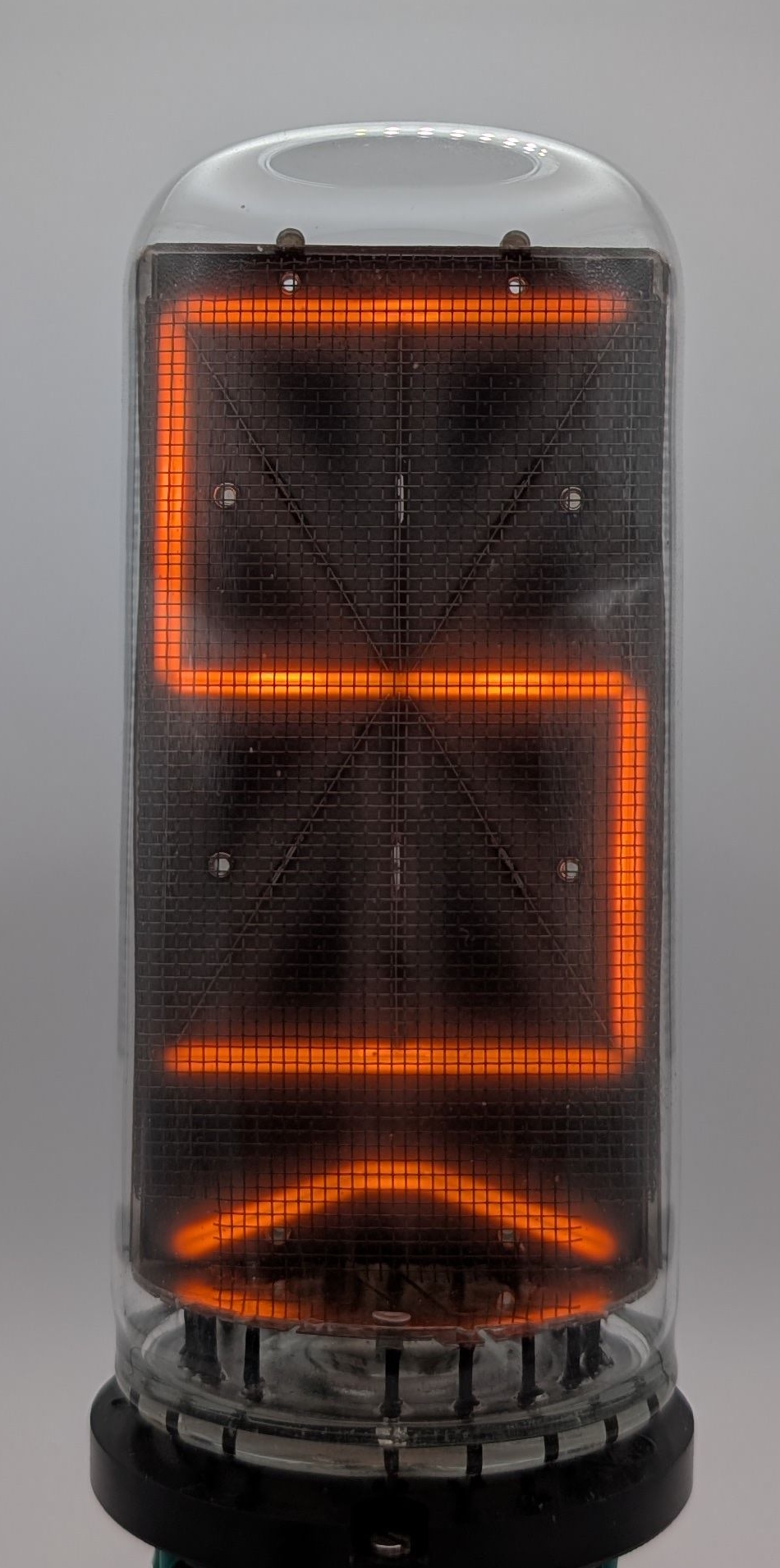
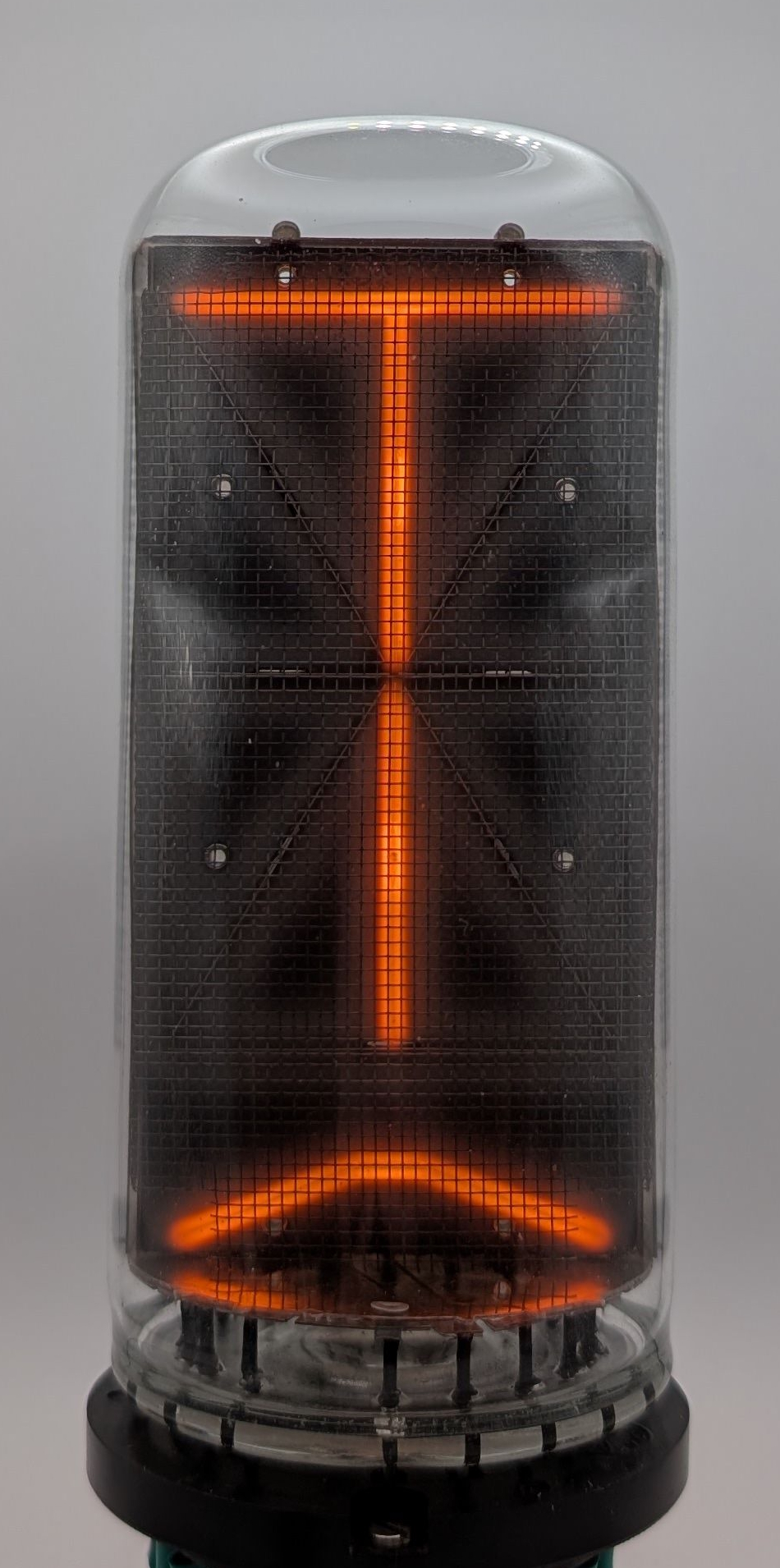
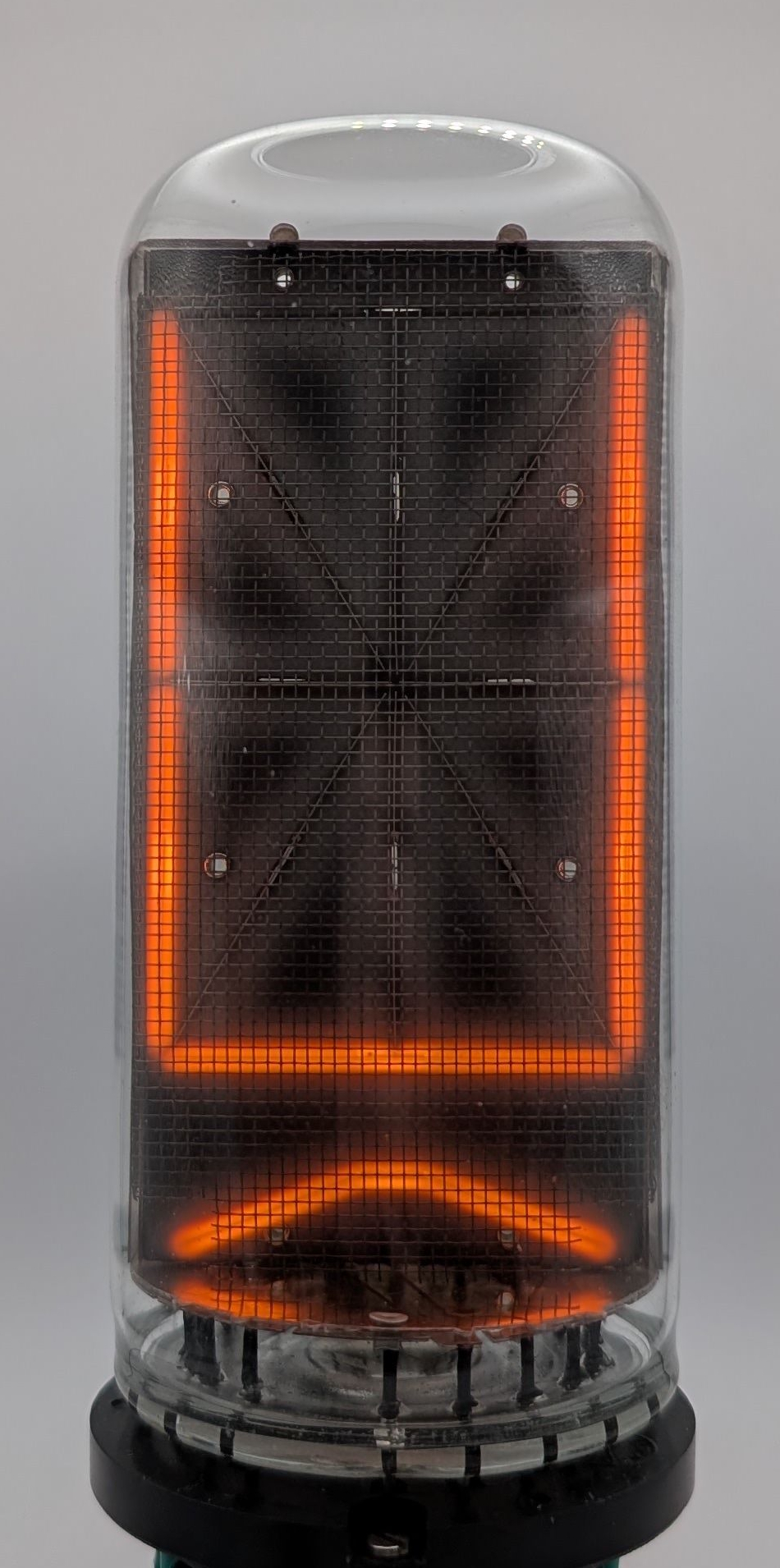
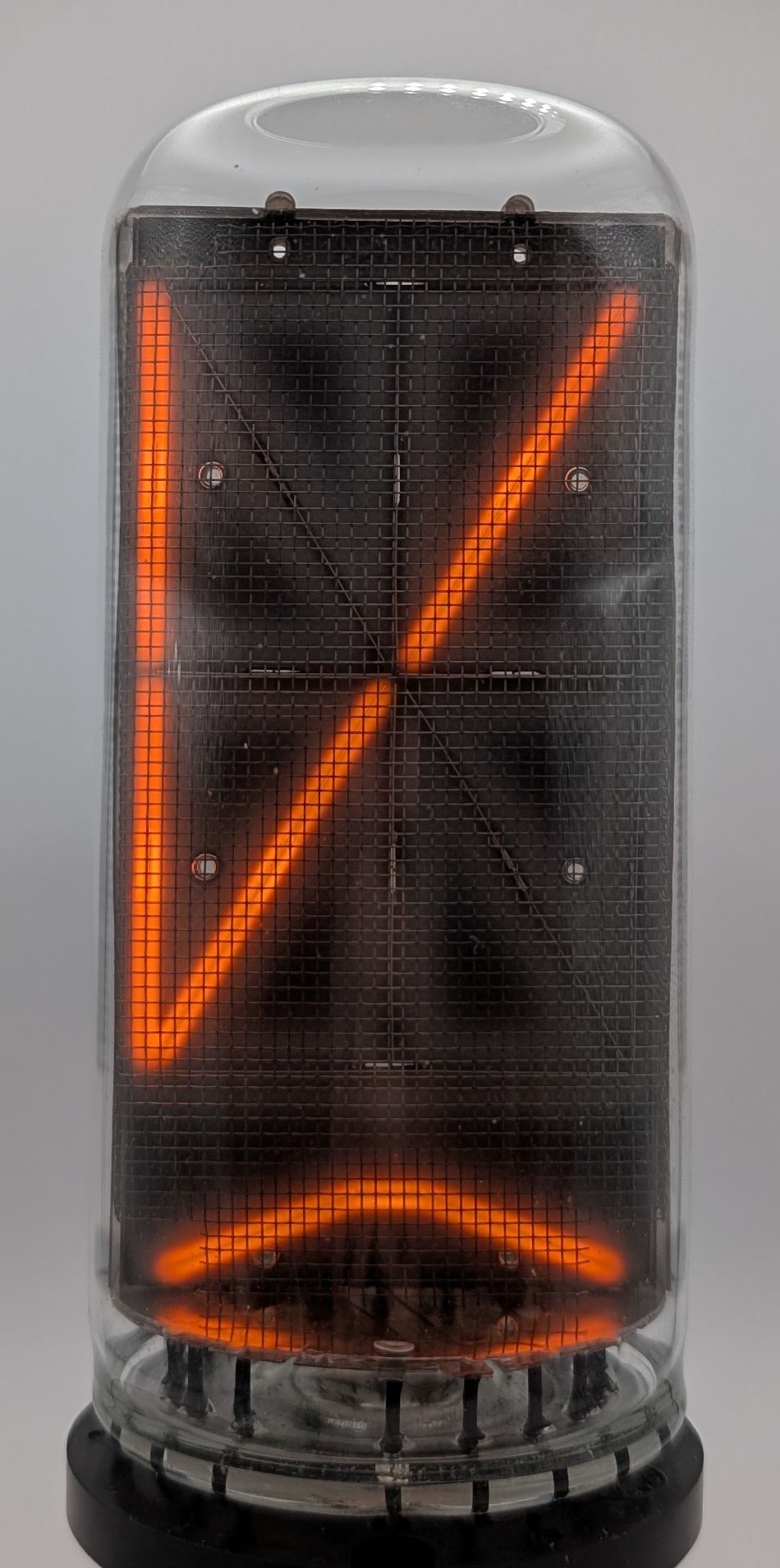
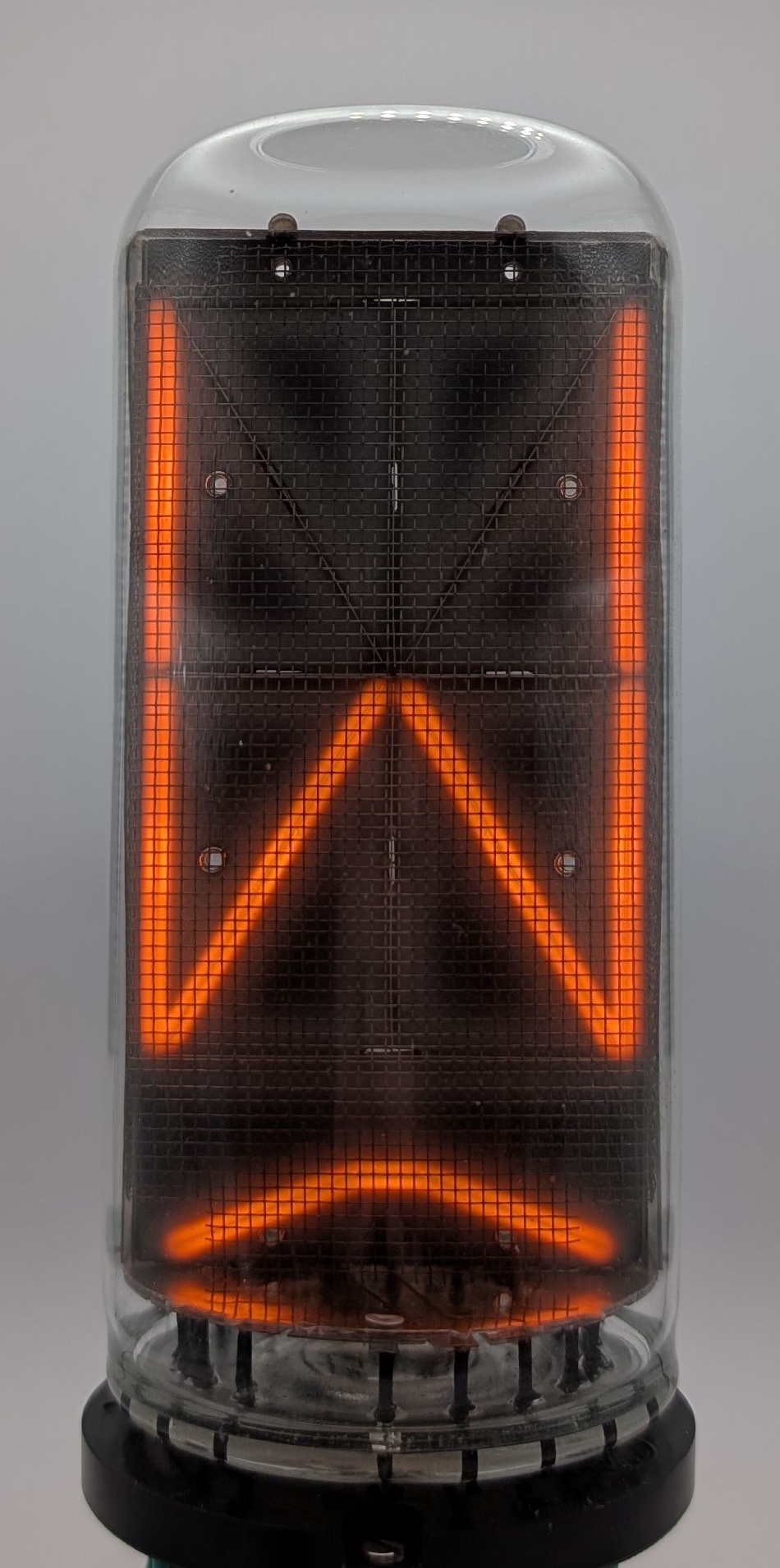
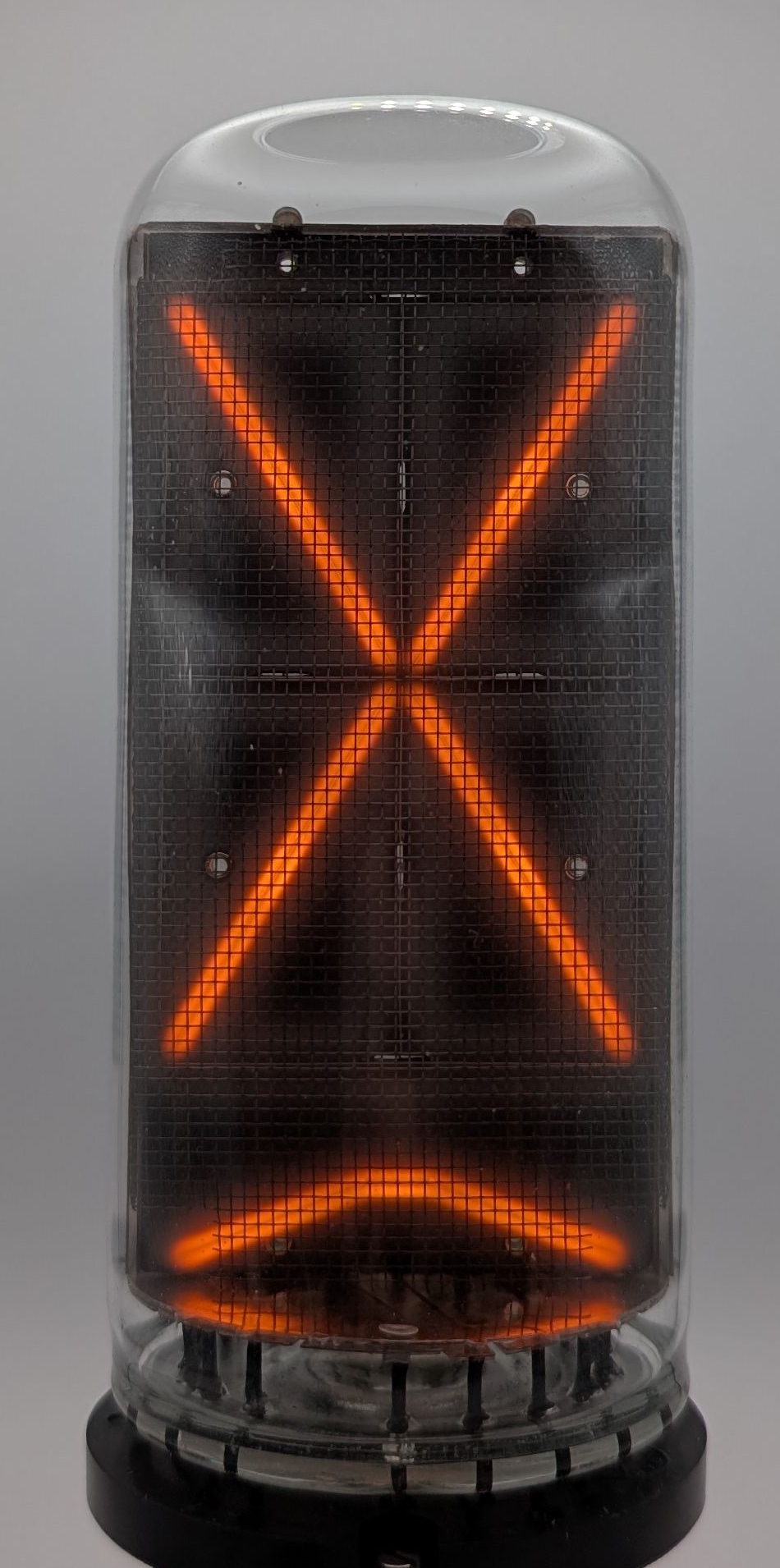
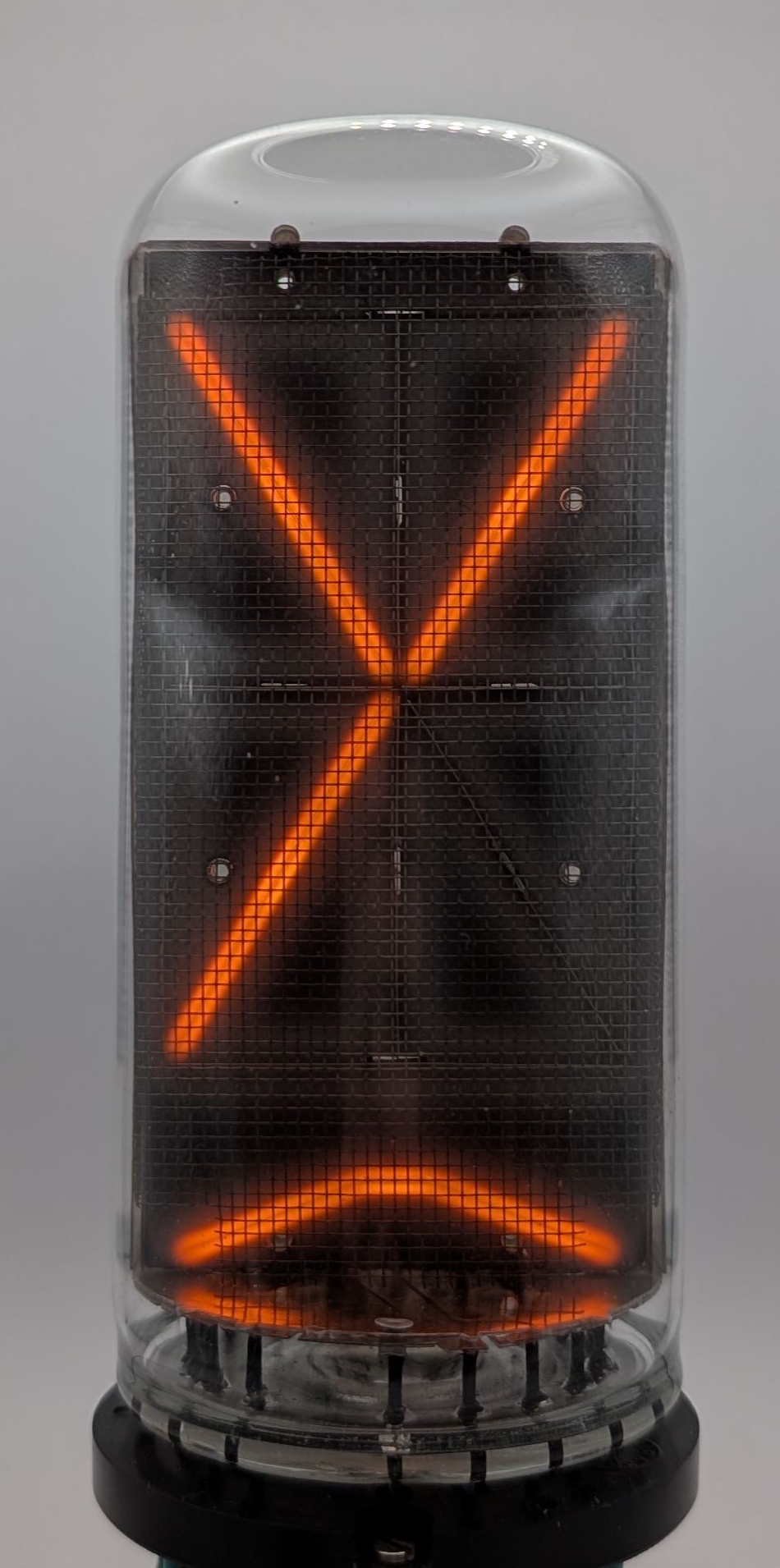
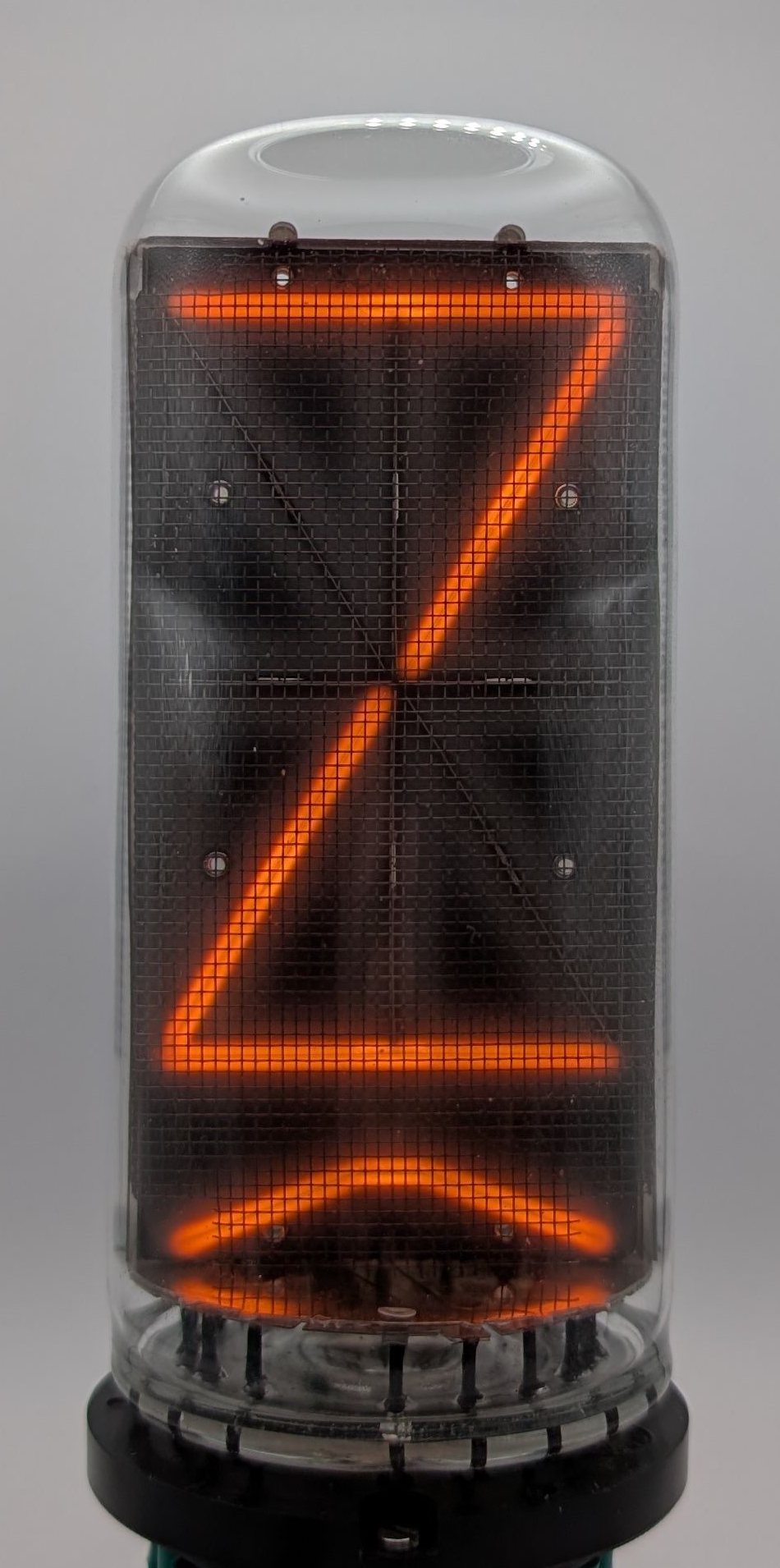
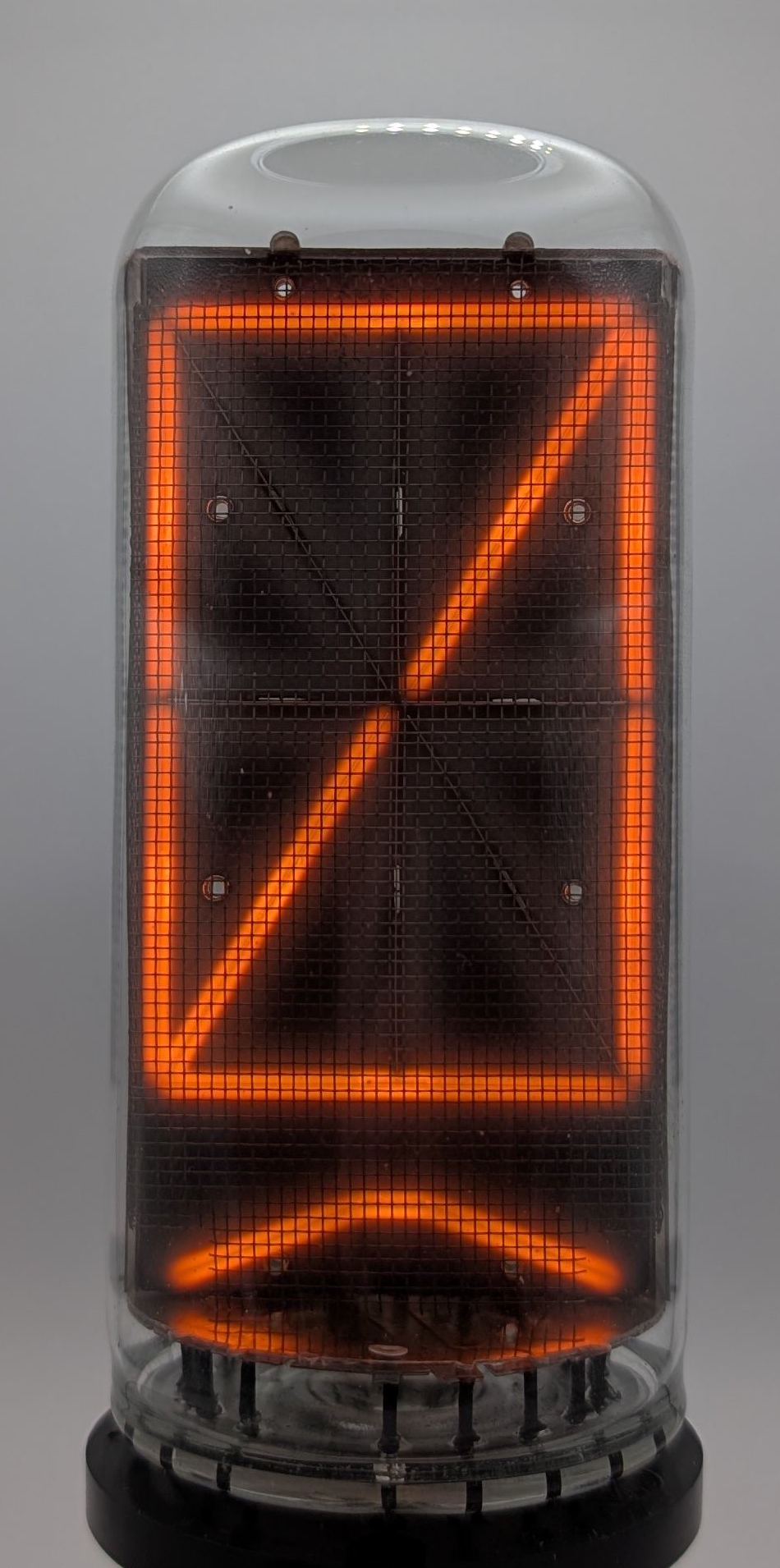
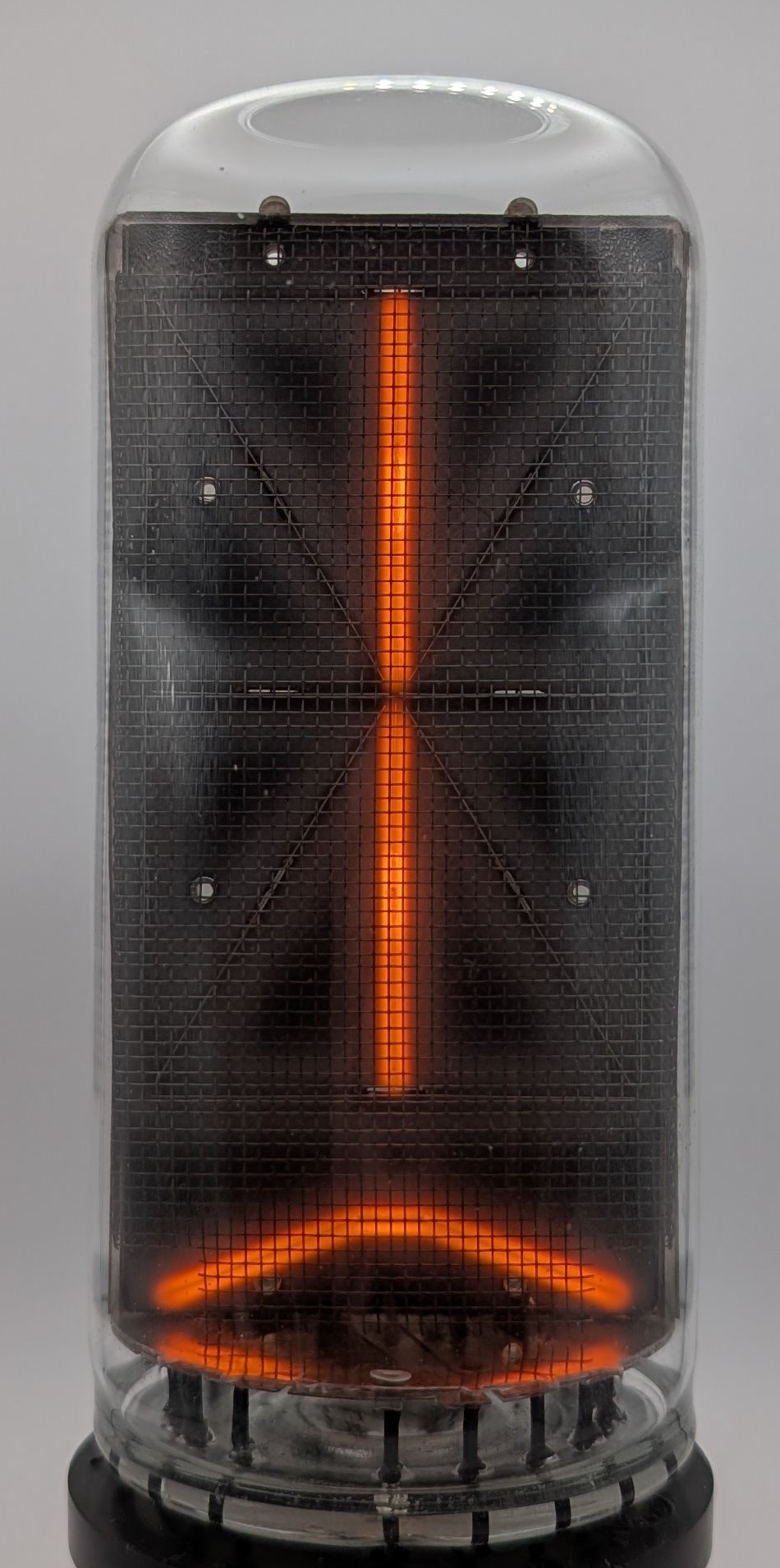
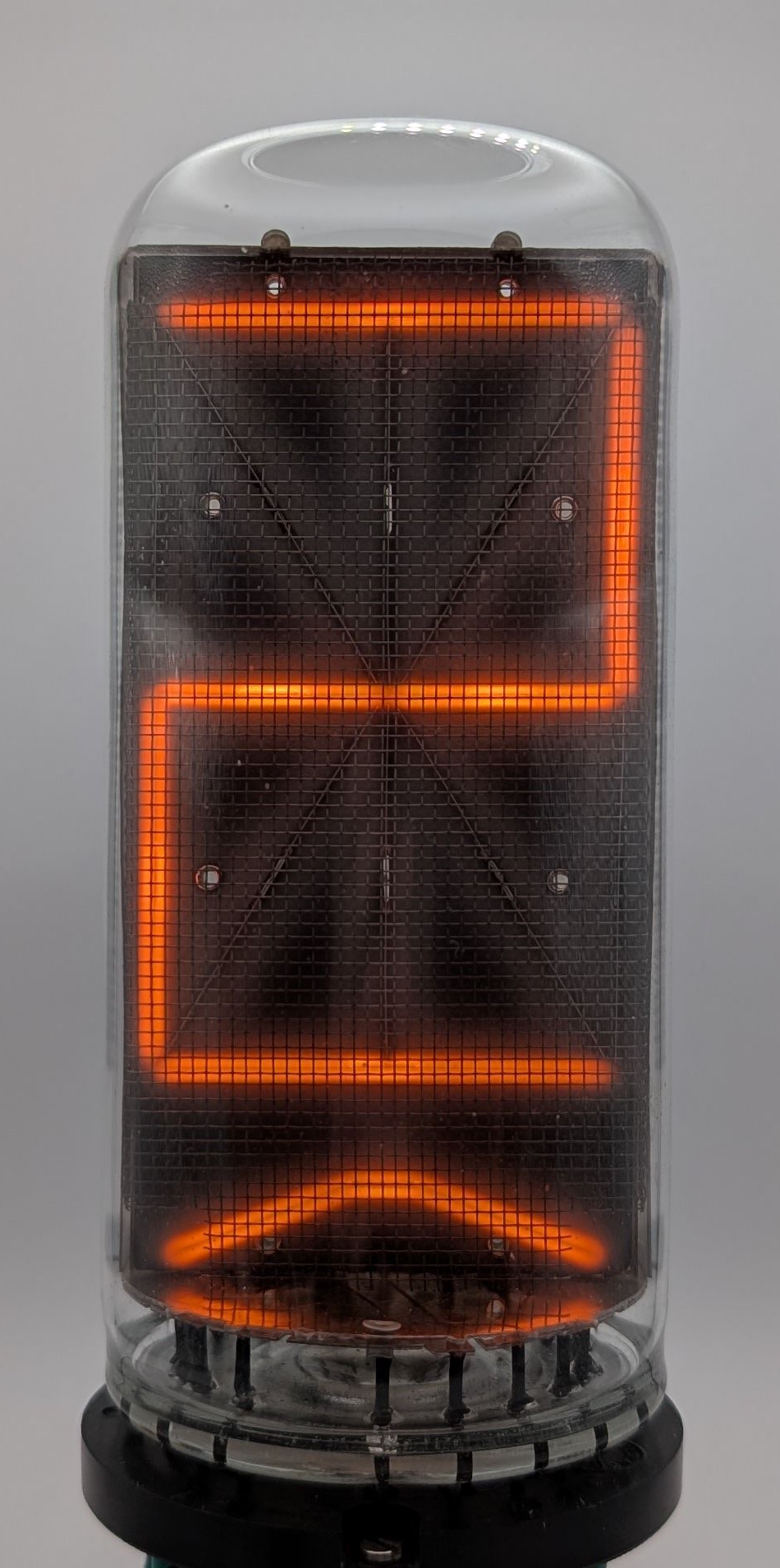
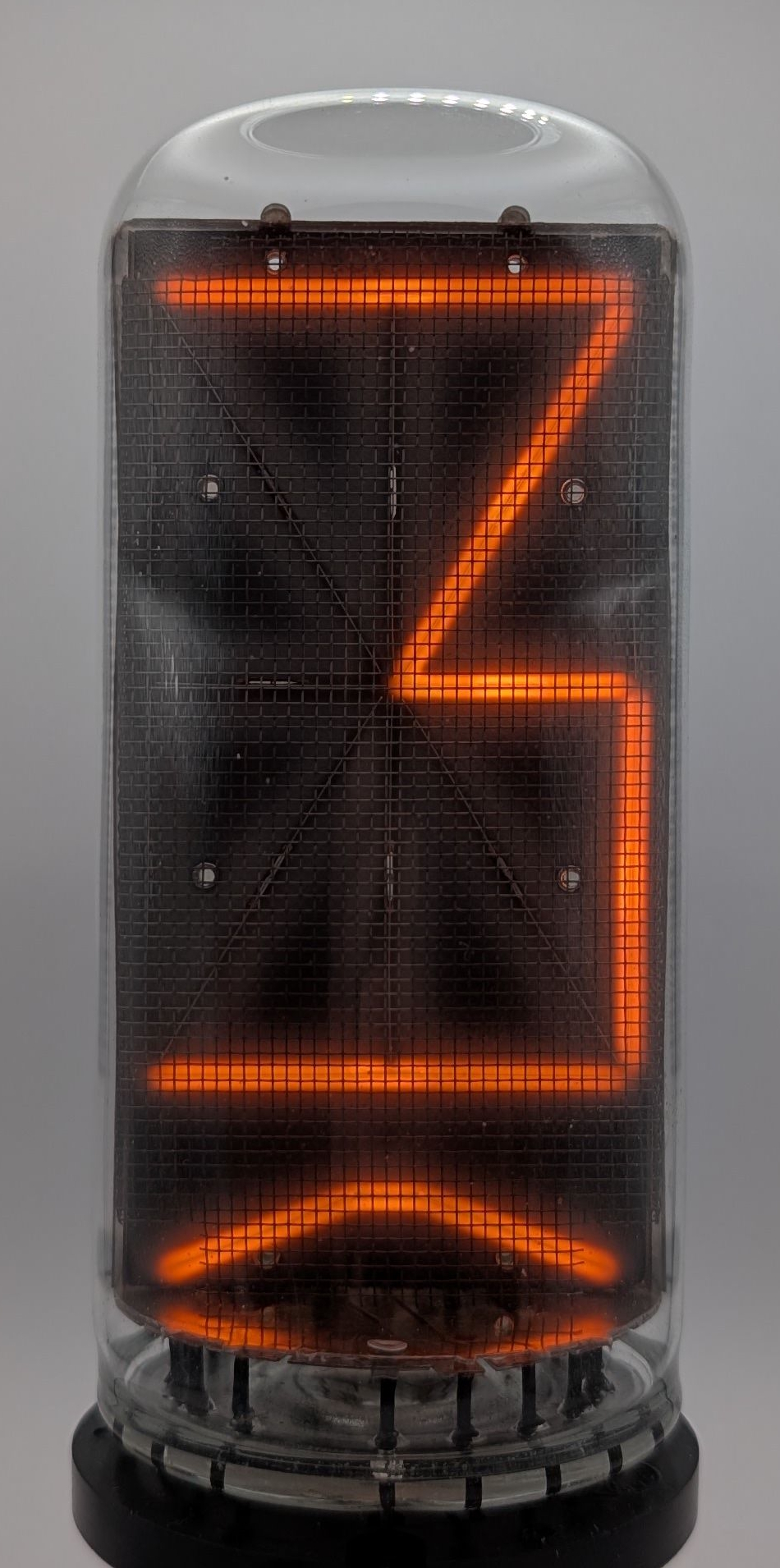
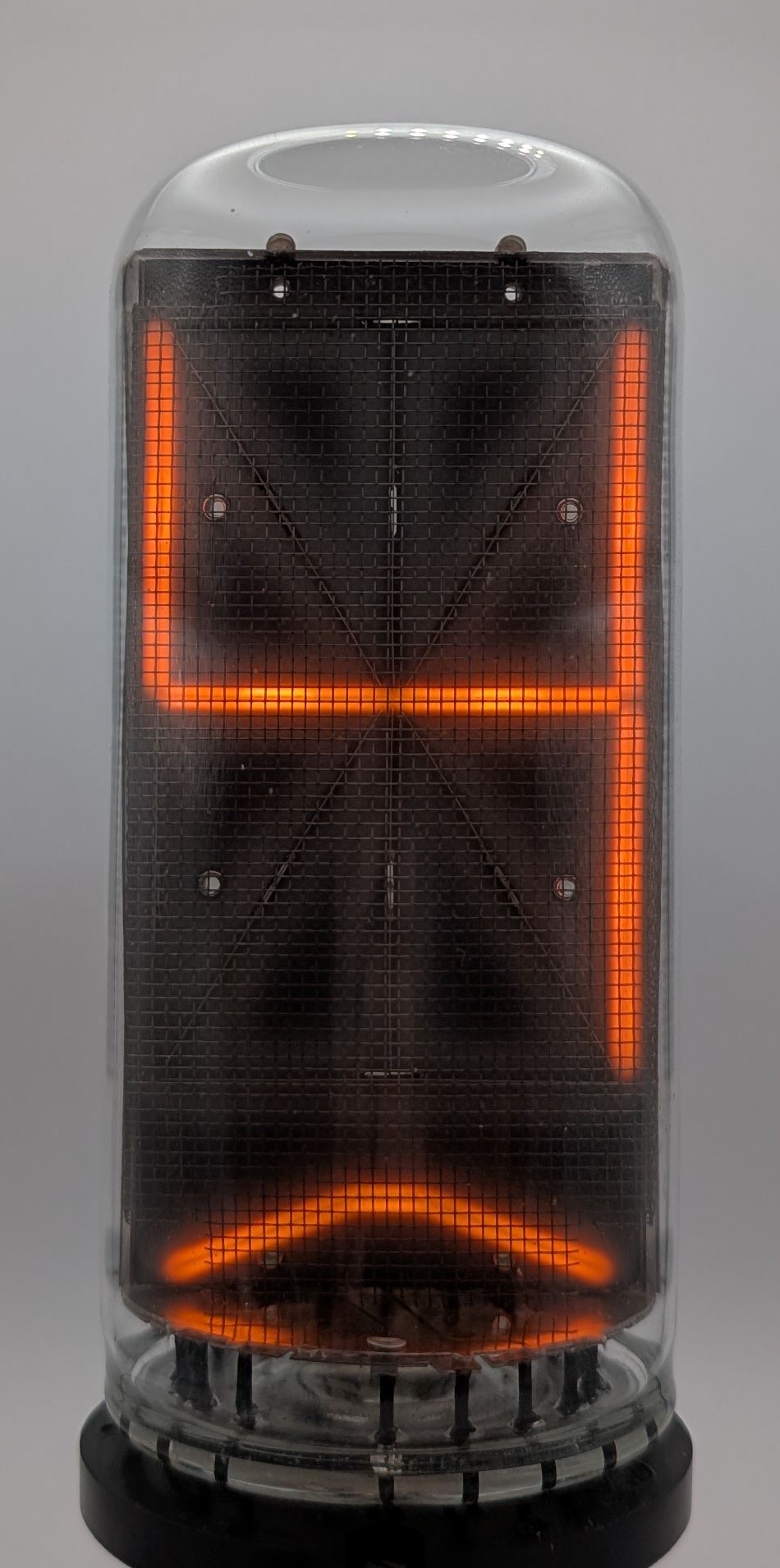
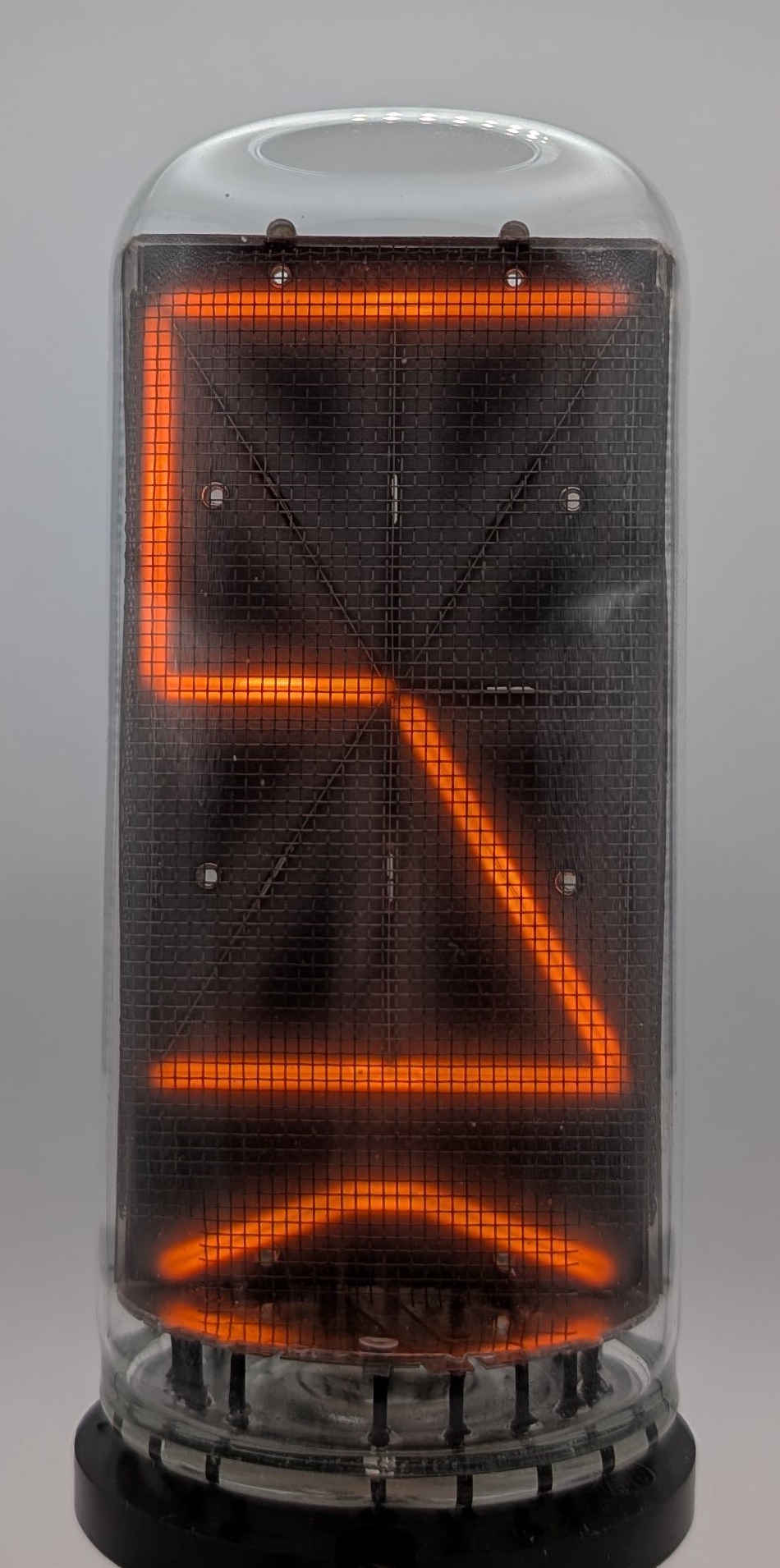
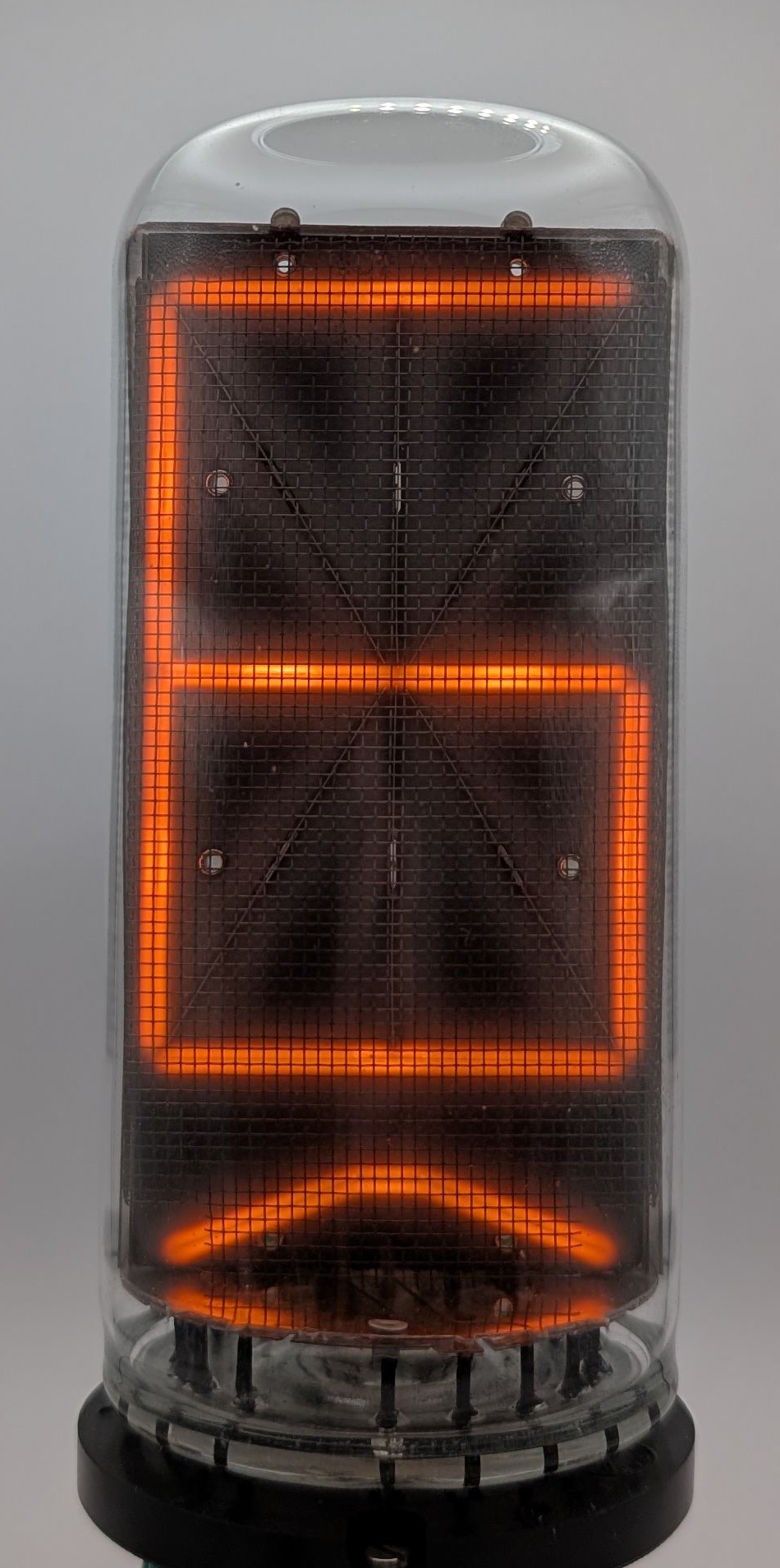
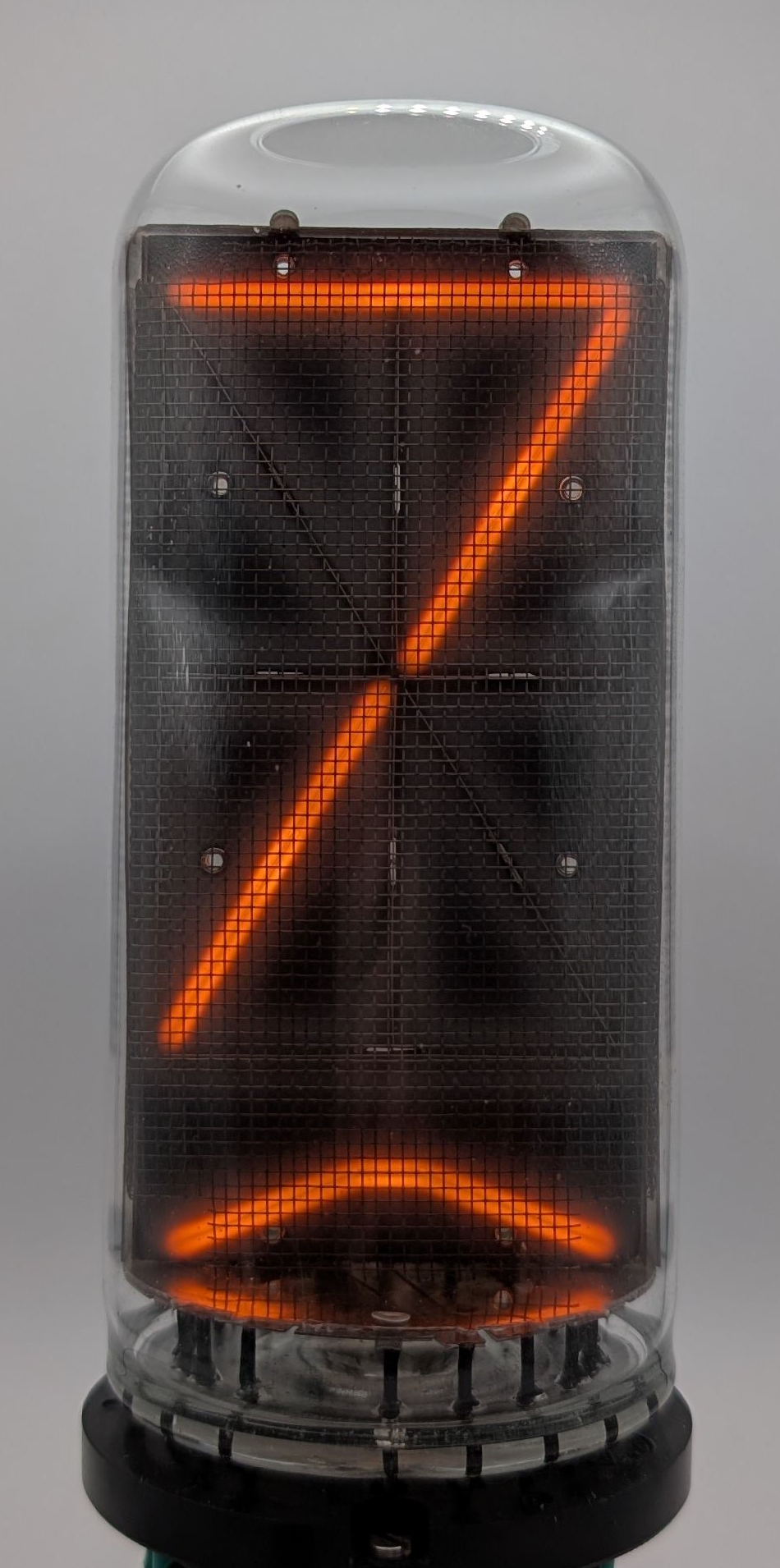
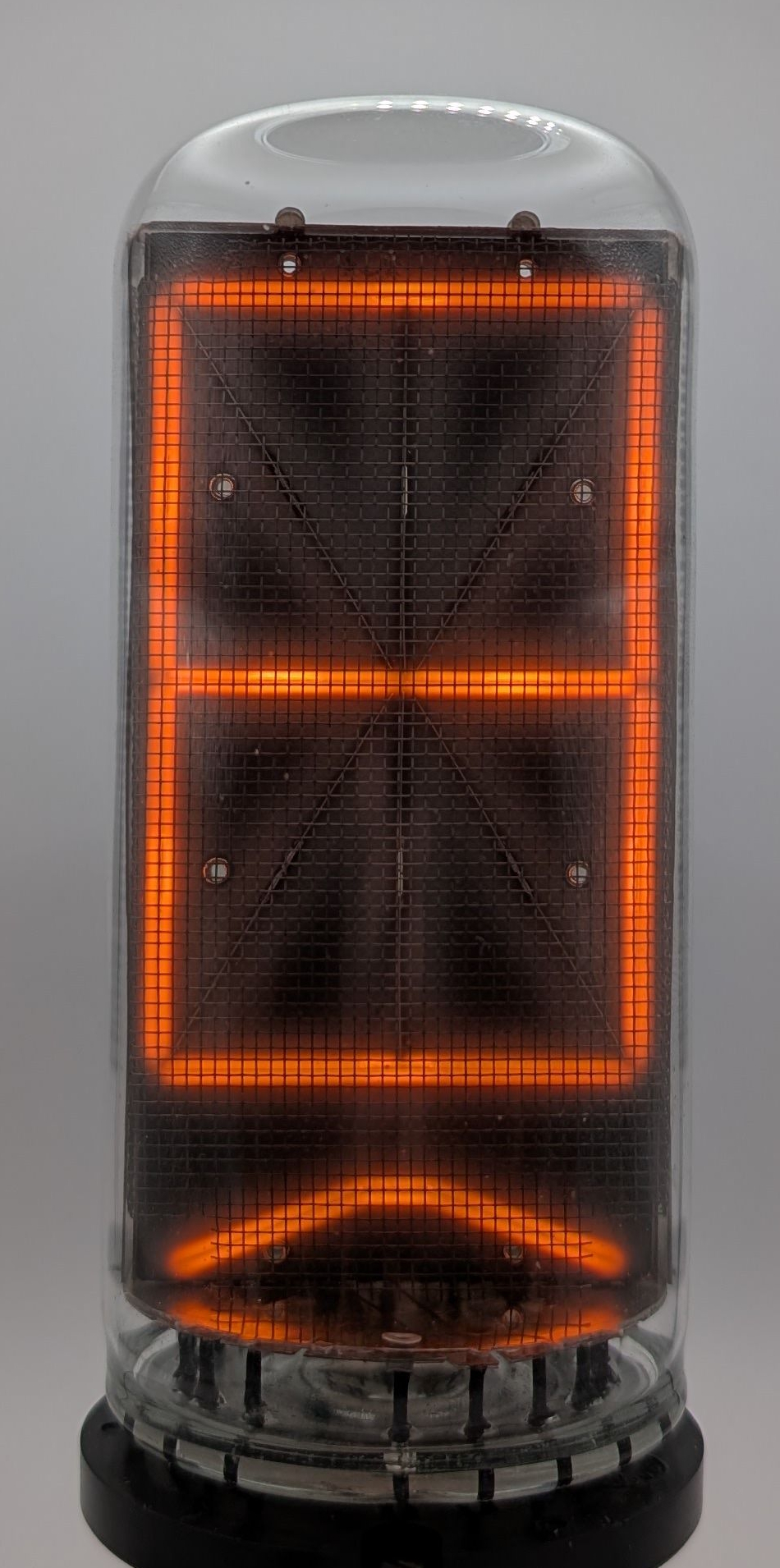
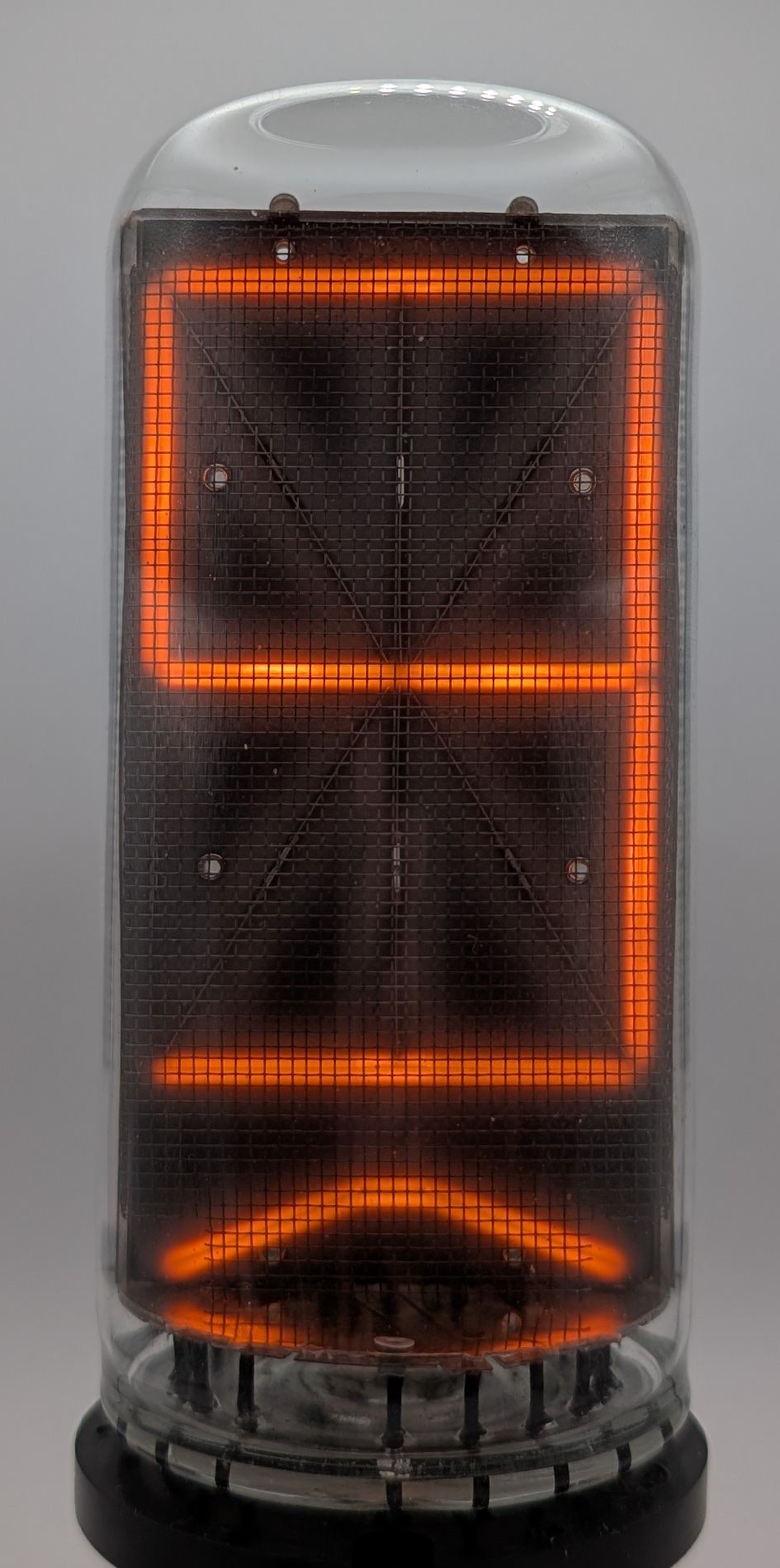
The B-7971 is a very large neon-filled alphanumeric display tube manufactured by Burroughs. Unlike ordinary Nixie tubes, which contain cathodes in the shape of symbols arranged on a stack, the B-7971 features 14 individual wire segments that can be combined to display every letter of the English alphabet in addition to digits 0 through 9. An additional segment in the bottom can be used to display an underscore. As opposed to the typical 16 segments found in most alphanumeric displays, the B-7971 only has a single segment in the top and bottom of the display area.
Originally, the tube found commerical use primarily in the Letrascan stock tickers sold by Ultronic. Virtually all B-7971s still around today have been salvanaged from one of these devices. Today, it is also known for its exceptional reliability and has proven popular among collectors for building large clocks and word displays.
Since the tube’s total current draw varies with the number of segments lit, a single anode resistor cannot effectively limit the current. Instead, each cathode must be connected to its own resistor. The datasheet suggests using specific resistor values for certain segments to ensure uniform brightness. The most frequent failure mode of a B-7971 appears to be two or more cathodes shorting together. This may occur due to physical impact or the tube being overdriven for prolonged periodes of time.
The B-7971 was the largest member of a family of alphanumeric display tubes produced by Burroughs. Its smaller counterparts being the B-5971 and the exceptionally rare B-8971.
Key Specifications
| Property | Description |
|---|---|
| Manufacturer | Burroughs |
| Time period | mid 1960s |
| Digit height | 63.5mm |
| Envelope diameter | ~55mm |
| Envelope height | ~116mm |
| Socket | SK-137 |
References
 |  |  |  |  |  |
 |  |  |  |  |  |
 |  |  |  |  |  |
 |  |  |  |  |  |
 |  |  |  |  |  |
 |  |  |  |  |  |